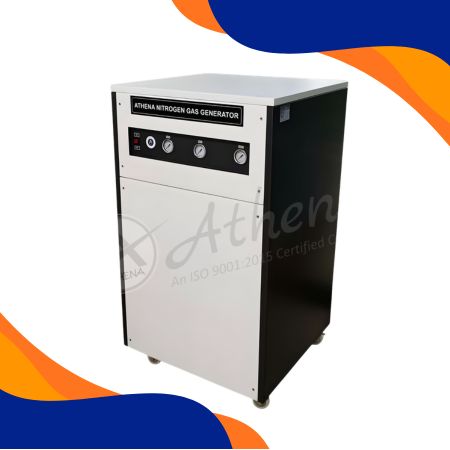
Laboratories using gas chromatography, mass spectrometry, and spectroscopy require a steady supply of high purity gases. A Gas Generator produces nitrogen, air, or hydrogen directly inside the laboratory with safe operation, providing a reliable alternative to traditional gas cylinders.
Analytical instruments depend on stable gas flow and consistent purity to maintain accurate results. When cylinders run empty or pressure fluctuates, experiments can stop unexpectedly. A modern laboratory gas generator system produces gas on demand and supports uninterrupted instrument operation.
Manufacturers such as Athena Instruments design generator systems that supply nitrogen, hydrogen, and air for analytical laboratories. Installing a lab gas generator India solution helps laboratories improve safety, control gas purity, and reduce long term operational costs.
Why Laboratories Install Gas Generators
Many laboratories previously depended on high pressure cylinders. While cylinders provide gas supply, they require frequent replacement and dedicated storage space.
A lab nitrogen generator India or hydrogen generator produces gas continuously within the laboratory environment.
Main advantages of installing gas generators for analytical labs include improved reliability and safer gas handling.
- Continuous gas supply for instruments
- Reduced cylinder storage and handling
- Controlled gas purity levels
- Lower long term operating costs
- Consistent pressure for analytical systems
Because of these advantages, many laboratories now install a nitrogen gas generator for laboratory instruments instead of relying on cylinder deliveries.
Types of Laboratory Gas Generator System
Laboratories typically use nitrogen generators, hydrogen generators, air generators, or integrated systems depending on the instruments installed.
| Generator Type | Typical Application | Technology |
| Nitrogen Gas Generator | GC, LCMS, FTIR, ELSD, CAD detectors | Membrane or PSA |
| Hydrogen Gas Generator | Gas chromatography systems | PEM electrolysis / Alkaline membrane |
| Zero Air Generator | GC-FID and analytical instruments | Catalytic purification |
| Combination Gas Generator | Multiple GC instruments | Integrated multi gas generator system |
A combination gas generator for GC allows laboratories to supply hydrogen, nitrogen, and air from a single system.
Nitrogen Gas Generator for Laboratory Instruments
A nitrogen gas generator for laboratory instruments produces nitrogen from compressed air using separation technology. The generator removes oxygen and moisture while supplying nitrogen directly to analytical instruments.
Two common generator technologies are used.
Membrane nitrogen gas generator
Compressed air passes through membrane modules that separate nitrogen from oxygen. These systems are compact and suitable for many laboratory applications.
PSA nitrogen generator
Pressure swing adsorption technology uses molecular sieve material to produce higher nitrogen purity levels required by sensitive instruments.
Laboratories installing a lab nitrogen gas system benefit from reliable nitrogen supply without cylinder replacement.
Hydrogen Gas Generator for Gas Chromatography
Gas chromatography instruments frequently use hydrogen as a carrier gas or as fuel gas for flame ionisation detectors.
A hydrogen gas generator for GC produces hydrogen using proton exchange membrane electrolysis. This process separates hydrogen from purified water using an electrochemical reaction.
A hydrogen generator offers several advantages for GC laboratories.
- Continuous hydrogen production
- Stable gas purity for GC instruments
- Reduced cylinder handling
- Built in safety monitoring systems
For flame ionisation detectors, laboratories commonly install a hydrogen generator for GC-FID.
Zero Air Generator for Gas Chromatography
Gas chromatography instruments equipped with flame ionisation detectors require high purity air for stable detector operation. A Zero Air Generator for GC produces purified air by removing hydrocarbons and impurities from compressed air.
This purified air is used as combustion air in GC-FID systems and helps maintain accurate detector response.
A Zero Air Generator provides several operational advantages for laboratories.
- Continuous supply of hydrocarbon-free air
- Stable detector performance for GC-FID systems
- Reduced dependence on air cylinders
- Consistent air purity for analytical instruments
Many laboratories now install a Zero Air Generator for GC together with hydrogen generators to support flame ionisation detectors.
Athena Instruments manufactures zero air generator systems designed for gas chromatography laboratories that require reliable and clean air supply for GC detectors.
Nitrogen Generator vs Gas Cylinder
Many laboratories compare generator systems with cylinders before making a purchasing decision.
| Factor | Gas Cylinder | Gas Generator |
| Gas supply | Limited volume | Continuous production |
| Safety | High pressure storage | Low internal storage |
| Cost | Recurring refill charges | Lower long term cost |
| Space requirement | Cylinder storage needed | Compact installation |
This nitrogen generator vs gas cylinder comparison explains why laboratories gradually shift to generator systems.
Gas Generators for Analytical Instruments
Different laboratory instruments require nitrogen or hydrogen supply for stable operation.
Nitrogen Gas Generator for LC-MS
Mass spectrometry systems require large volumes of nitrogen for nebulisation and drying processes. A nitrogen generator for LCMSMS provides consistent nitrogen supply without cylinder interruptions.
Nitrogen Generator for FTIR
FTIR spectrometers use nitrogen purge gas to remove moisture from optical components. A nitrogen generator for FTIR helps maintain stable instrument performance.
Nitrogen Generator for CAD and ELSD
Detectors such as CAD and ELSD require nitrogen for aerosol formation and solvent evaporation. Installing a nitrogen generator for CAD detector or nitrogen generator for ELSD supports continuous detector operation.
Nitrogen Gas Purity for LCMS
Nitrogen purity requirements depend on the instrument type and application.
| Instrument | Typical Nitrogen Purity |
| LCMS | 95–99.5% |
| LCMSMS | Around 99% |
| CAD detector | Around 99% |
| ELSD | Around 99% |
Selecting the correct nitrogen supply for LCMS helps maintain instrument sensitivity and stable results.
Hydrogen Generator Safety in Laboratory
Many laboratories ask whether hydrogen generators are safe for gas chromatography systems.
Modern hydrogen generator safety system technology includes pressure monitoring, leak detection sensors, and automatic shutdown functions. The generator produces hydrogen only when the instrument requires it, which keeps internal gas storage very low.
These safety features reduce concerns related to hydrogen generator explosion risk compared with compressed hydrogen cylinders.
Benefits of Lab Gas Generator Installation
Installing a lab gas generator system in India improves laboratory workflow and reduces operational interruptions.
Laboratories benefit from:
- Continuous gas production
- Reduced cylinder handling
- Stable gas purity for instruments
- Lower operating costs over time
- Reliable gas supply for chromatography and spectroscopy systems
Manufacturers such as Athena Instruments provide generator systems designed for analytical laboratories using chromatography, spectroscopy, and mass spectrometry instruments.
Laboratory Gas Generator Maintenance
Routine maintenance helps maintain generator efficiency and gas purity.
| Maintenance Task | Frequency |
| Air filter replacement | 6–12 months |
| Module inspection | Annually |
| Water refill for hydrogen generators | Periodically |
| Performance check | Annually |
Regular laboratory gas generator maintenance supports long term system reliability.
Gas Generator Solutions from Athena Instruments
Choosing the correct Gas Generator helps laboratories maintain reliable instrument operation and reduce dependence on cylinder supply.
Athena Instruments manufactures nitrogen generators, hydrogen generators, and Zero Air Generator for GC systems designed for GC, LCMS, FTIR, and detector applications. These systems supply nitrogen, hydrogen, and purified air with controlled purity and stable pressure for analytical instruments.
Frequently Asked Questions
Q1. How does a nitrogen gas generator work in a laboratory?
Answer: A nitrogen generator separates nitrogen from compressed air using membrane or adsorption technology and supplies purified nitrogen to analytical instruments.
Q2. Is hydrogen generator safe for GC instruments?
Answer: Modern hydrogen generator for GC labs include leak detection sensors and automatic shutdown systems, making them safer than hydrogen cylinders.
Q3. Are gas generators better than cylinders for laboratories?
Answer: Generator systems provide continuous gas production, reduce cylinder handling, and lower long term operating costs.
Q4. Which instruments use nitrogen gas generator systems?
Answer: LCMS systems, FTIR spectrometers, CAD detectors, ELSD detectors, and chromatography instruments commonly use nitrogen supplied by generator systems.
Q5. What nitrogen purity is required for LCMS instruments?
Answer: Most LCMS instruments operate efficiently with nitrogen purity between 95 per cent and 99.5 per cent.