Choosing the correct nitrogen generation system often feels confusing when technical terms and sales claims blur real differences. For laboratories and industrial setups where nitrogen purity, flow stability, and operating cost matter every day, the discussion around PSA vs Membrane Nitrogen Generator becomes a practical decision rather than a theoretical one. This guide explains both technologies in clear language, helping you understand how each system behaves in real operating conditions and which one fits your application without unnecessary expense or complexity.
Nitrogen generators are no longer optional accessories. They support chromatography, sample preparation, packaging, purging, and safety critical processes. Selecting the wrong technology can lead to unstable results, higher running costs, or maintenance issues over time.
Why Nitrogen Generator Selection Matters More Than Ever
Laboratories and process units now expect steady nitrogen supply without dependence on cylinders. On site generation offers control, safety, and predictable operating cost. However, not all nitrogen demand looks the same. Flow rate, purity requirement, duty cycle, and air quality vary widely between applications.
According to manufacturers, most dissatisfaction with nitrogen generators comes from poor matching between application needs and generator technology. Understanding this difference upfront avoids operational trouble later.
How PSA and Membrane Nitrogen Generators Work in Simple Terms
Pressure Swing Adsorption Technology Explained
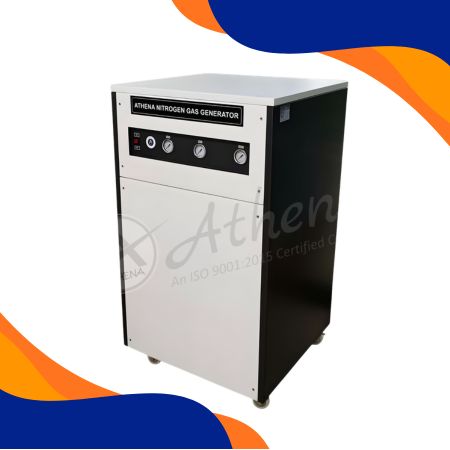
PSA nitrogen generators separate nitrogen using carbon molecular sieve material. Compressed air enters adsorption vessels where oxygen, moisture, and trace gases get trapped while nitrogen passes through. The system switches between vessels to allow regeneration.
This switching action gives PSA systems their name. The result is high purity nitrogen suitable for demanding laboratory and industrial processes.
Membrane Separation Technology Explained
Membrane nitrogen generators use hollow fibre membranes. Compressed air passes through these fibres where oxygen and moisture permeate faster than nitrogen. Nitrogen remains and exits as the product gas.
Membrane systems have fewer moving parts and offer continuous flow, making them suitable for applications where ultra high purity is not required.
PSA Nitrogen Generator Advantages and Disadvantages
Advantages of PSA Technology
PSA systems provide high nitrogen purity, often up to 99.999 percent depending on design. This makes them suitable for analytical instruments, pharmaceutical processes, and controlled environments.
They deliver stable purity even when flow demand varies. PSA systems also offer better efficiency at higher purity levels compared to membrane systems.
According to manufacturers, PSA generators offer better long term flexibility as purity and flow can be adjusted by system configuration.
Disadvantages of PSA Technology
PSA systems involve valves and control components that require periodic service. They need clean, dry compressed air for reliable operation.
Initial investment tends to be higher compared to membrane units. PSA systems also occupy slightly more floor space due to twin tower design.
Membrane Nitrogen Generator Advantages and Disadvantages
Advantages of Membrane Technology
Membrane systems have simple construction with minimal moving parts. This results in lower maintenance needs and quieter operation.
They start producing nitrogen immediately without warm up time. Membrane units suit applications with continuous moderate flow requirements and lower purity needs.
Compact design allows easy integration in space constrained areas.
Disadvantages of Membrane Technology
Membrane generators struggle to achieve high purity levels efficiently. As purity demand increases, nitrogen recovery drops sharply.
Flow rate stability reduces at higher purity settings. Operating cost increases due to higher air consumption.
According to manufacturers, membrane systems are less adaptable when future purity requirements increase.
PSA vs Membrane Nitrogen Flow Rate Comparison
Flow rate behaviour differs significantly between the two technologies.
PSA generators handle fluctuating demand better. They maintain consistent output even when instruments cycle on and off.
Membrane generators perform best under steady flow conditions. Sudden changes in demand may affect purity and pressure.
For laboratories with intermittent instrument use, PSA systems provide better operational control. For packaging or purging processes with constant flow, membrane systems may fit well.
PSA vs Membrane Nitrogen Efficiency in Daily Operation
Efficiency depends on purity requirement and air consumption.
PSA systems show better nitrogen recovery at higher purity levels. This reduces compressed air load and operating cost over time.
Membrane systems waste more nitrogen as purity increases. This raises compressor energy usage and long term cost.
According to manufacturers, PSA technology becomes more economical beyond 95 percent purity, while membrane systems suit lower purity ranges.
PSA vs Membrane Nitrogen Maintenance Expectations
Maintenance planning plays a major role in total ownership cost.
PSA Maintenance Factors
- Periodic valve inspection
- Molecular sieve replacement after defined service life
- Air filtration upkeep
With proper air quality management, PSA systems deliver long service life.
Membrane Maintenance Factors
- Minimal mechanical service
- Membrane replacement after extended operation
- Strict inlet air quality requirements
Membrane fibres are sensitive to oil and moisture contamination.
Step by Step Guide to Choosing the Right Nitrogen Generator
Step 1: Define Purity Requirement
Below 95 percent purity usually favours membrane systems. Above 95 percent purity suits PSA technology.
Step 2: Understand Flow Pattern
Variable or cyclic demand works better with PSA systems. Constant flow suits membrane units.
Step 3: Evaluate Operating Hours
Continuous operation with stable demand supports membrane usage. Mixed duty cycles favour PSA systems.
Step 4: Assess Future Expansion
PSA systems offer easier scalability if purity or flow increases later.
Step 5: Review Compressed Air Quality
Both systems need clean air, but membrane fibres are more sensitive to contamination.
Safety Notes for Nitrogen Generator Installation
Nitrogen displaces oxygen and creates asphyxiation risk in enclosed spaces. Proper ventilation is essential.
Oxygen monitoring devices should be installed where nitrogen release is possible.
Pressure relief and alarm systems must remain functional and tested.
According to manufacturers, regular safety audits reduce operational risk and support compliance.
Comparison Table: PSA vs Membrane Nitrogen Generator
| Parameter | PSA Nitrogen Generator | Membrane Nitrogen Generator |
| Purity Range | High up to 99.999 percent | Low to medium |
| Flow Stability | Strong under variable demand | Best at constant flow |
| Efficiency | Better at high purity | Drops at high purity |
| Maintenance | Moderate | Low |
| Footprint | Medium | Compact |
| Application Range | Laboratories, pharma, electronics | Packaging, purging |
Which Nitrogen Generator Is Best for My Application?
Laboratories running gas chromatography, sample drying, or analytical instruments usually benefit from PSA systems due to purity stability.
Packaging lines, tyre inflation, and inerting processes with modest purity demands often find membrane systems suitable.
Choosing the right nitrogen generator depends on understanding daily usage rather than focusing only on initial cost.
Role of Athena Instruments in Nitrogen Generator Selection
Athena Instruments supports laboratories and industries by assessing real operating needs before suggesting nitrogen generation technology.
According to manufacturers and field experience, system sizing and air quality preparation impact performance more than brand selection alone.
Athena Instruments focuses on matching technology to application rather than overselling capacity.
Frequently Asked Questions
Q1. How do I choose between PSA vs Membrane Nitrogen Generator for a laboratory?
Answer: Laboratories needing stable high purity nitrogen with varying flow demand usually prefer PSA systems. Membrane systems suit basic purging tasks with steady flow.
Q2. What purity level separates PSA and membrane usage?
Answer: Membrane systems perform well up to around 95 percent purity. PSA systems handle higher purity with better efficiency.
Q3. Is PSA nitrogen generator maintenance difficult?
Answer: PSA maintenance remains manageable with proper air filtration and scheduled inspection. Service intervals are predictable.
Q4. Does membrane nitrogen generation consume more compressed air?
Answer: Yes, air consumption increases sharply as purity rises in membrane systems, impacting operating cost.
Q5. Which system offers better long term cost control?
Answer: For high purity and variable demand, PSA systems often deliver better cost stability over time.