


What Is a Diaphragm Vacuum Pump?
When handling sensitive laboratory work or industrial tasks, vacuum systems often play a vital role. Among the different types of vacuum pumps available, the diaphragm vacuum pump stands out for its oil-free operation and reliable performance.
A diaphragm vacuum pump is a positive displacement pump designed to create a vacuum by moving gas through a chamber with a flexible diaphragm. These pumps are known for their clean operation, low maintenance, and suitability for various laboratory and industrial applications.
Laboratories, research centres, and industries looking for a dependable laboratory equipment supplier often prefer diaphragm vacuum pumps due to their efficiency and safety features. In India, Athena Technology provides quality diaphragm vacuum pumps suitable for a range of uses.
How Does a Diaphragm Vacuum Pump Work?
Understanding the working principle helps in knowing why this equipment is trusted across industries.
- The pump consists of a flexible diaphragm made of materials like rubber or PTFE.
- A connecting rod drives the diaphragm up and down inside a chamber.
- As the diaphragm moves down, it draws gas into the chamber through an inlet valve.
- When the diaphragm moves up, it compresses the gas and forces it out through the outlet valve.
- This cycle creates a continuous vacuum without the need for oil or lubricants.
The mechanism works on a simple yet effective reciprocating action, which means fewer chances of contamination and minimal maintenance needs.
Construction and Design Features
A typical diaphragm vacuum pump includes the following components:
- Flexible Diaphragm: The core part responsible for suction and compression.
- Inlet and Outlet Valves: Control the flow of gas, maintaining a vacuum seal.
- Drive Mechanism: Usually an eccentric motor connected to the diaphragm.
- Pump Head: Designed to house the diaphragm and valves securely.
The simple design ensures easy servicing and long-lasting operation, making it a preferred choice for laboratories and small-scale industries.
Benefits of Diaphragm Vacuum Pump
Choosing a diaphragm vacuum pump offers many advantages, especially for laboratories and industrial settings. Here are the main benefits of diaphragm vacuum pump:
- Oil-Free Operation
No need for lubricants, reducing contamination risks in sensitive experiments. - Low Maintenance
Fewer moving parts and no oil mean less frequent servicing. - Quiet Performance
Operates with low noise levels, ideal for laboratory environments. - Chemical Resistance
Diaphragms made from PTFE or similar materials resist aggressive chemicals. - Compact Design
Easy to install on lab benches or compact spaces. - Energy Efficient
Consumes less power compared to other vacuum pump types.
These features make it suitable for a range of tasks handled by a laboratory equipment supplier such as Athena Technology.
Common Applications of Diaphragm Vacuum Pumps
The diaphragm vacuum pump finds wide application in several sectors due to its versatile design. Here are the most common uses:
- Filtration Processes
Used in laboratories for vacuum filtration setups. - Vacuum Drying
Essential for drying sensitive samples without contamination. - Degassing of Liquids
Helps remove dissolved gases from liquids in laboratories and industries. - Vacuum Distillation
Assists in low-pressure distillation processes in research laboratories. - Evaporation Applications
Often paired with rotary evaporators to create the required vacuum. - Medical and Pharmaceutical Usage
Used in diagnostics, pharmaceutical research, and small production setups. - Food and Beverage Industry
Applied in sample preparation and product testing.
A reliable laboratory equipment supplier like Athena Technology can guide on selecting the right pump based on specific requirements.
How to Choose the Right Diaphragm Vacuum Pump
Selecting the right pump depends on understanding your laboratory or industrial needs. Here’s what you should look at before making a purchase:
- Vacuum Level Required
Check if the pump can achieve the vacuum level your process demands. - Flow Rate
Select a model that provides the necessary flow rate for your application. - Chemical Compatibility
Ensure the diaphragm material suits the chemicals used in your process. - Noise Level
Consider low-noise models for laboratory environments. - Power Consumption
Review energy ratings to avoid unnecessary operational costs. - Supplier Reputation
Work with trusted names like Athena Technology who offer after-sales support and service.
Maintenance Tips for Diaphragm Vacuum Pumps
Although the diaphragm vacuum pump requires minimal servicing, following some simple maintenance practices can increase its lifespan.
- Inspect diaphragms regularly for wear or cracks.
- Clean inlet and outlet valves to prevent blockages.
- Monitor vacuum performance and check for unusual noises.
- Replace diaphragms as per manufacturer guidelines.
- Use the pump within its recommended chemical and pressure limits.
Purchasing from a reliable laboratory equipment supplier guarantees access to service support and genuine replacement parts.
Why Choose Athena Technology for Diaphragm Vacuum Pumps
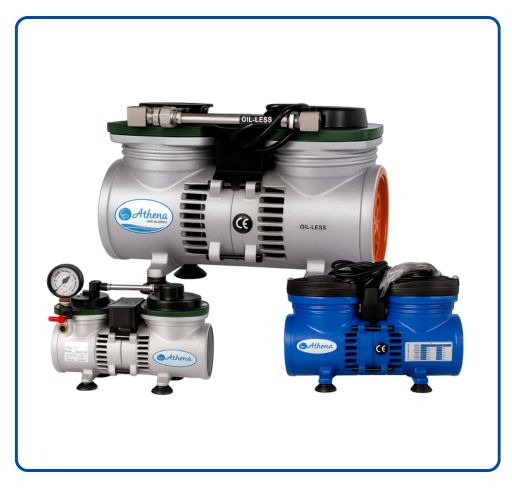
Athena Technology stands out in the Indian market as a trusted laboratory equipment supplier for quality diaphragm vacuum pumps.
- Offers a wide range of models suitable for laboratories, industries, and research facilities.
- Provides warranty and after-sales service for worry-free operation.
- Stocks pumps made from chemical-resistant materials for long-term use.
- Supports customers with technical guidance and prompt delivery.
With expertise in the industry, Athena Technology ensures customers receive products that meet their performance and budget expectations.
Frequently Asked Questions
Q1. What is a diaphragm vacuum pump and how does it work?
Answer: A diaphragm vacuum pump is a positive displacement pump that uses a flexible diaphragm to move gas and create a vacuum. The diaphragm’s movement controls gas flow through inlet and outlet valves without using oil or lubricants.
Q2. Where is a diaphragm vacuum pump commonly used?
Answer: It is widely used in laboratories, industries, pharmaceutical research, vacuum filtration, degassing, and vacuum drying applications.
Q3. What are the benefits of diaphragm vacuum pumps over other types?
Answer: They offer oil-free operation, low maintenance, quiet performance, chemical resistance, and energy efficiency, making them ideal for sensitive applications.
Q4. How do I select the right diaphragm vacuum pump for my laboratory?
Answer: Consider factors like vacuum level, flow rate, diaphragm material compatibility, noise level, power consumption, and supplier reputation before making a choice.
Q5. Does Athena Technology offer after-sales service for diaphragm vacuum pumps?
Answer: Yes, Athena Technology provides after-sales support, warranty coverage, and technical guidance for all diaphragm vacuum pumps sold.
Q6. Are diaphragm vacuum pumps suitable for chemical applications?
Answer: Yes, when equipped with chemically resistant diaphragms like PTFE, they are suitable for a wide range of chemical applications.
Q7. How often should a diaphragm vacuum pump be serviced?
Answer: While the pump requires low maintenance, periodic checks of the diaphragm and valves, along with cleaning and performance monitoring, help maintain its efficiency.
Conclusion
A clear understanding of what is a diaphragm vacuum pump can help laboratories and industries make the right choice for their vacuum needs. With its oil-free operation, low upkeep, and wide range of applications, the diaphragm vacuum pump proves to be a dependable solution for both scientific and industrial use.
Its ability to handle sensitive tasks without contamination, coupled with resistance to chemicals, makes it suitable for various processes from filtration and drying to degassing and distillation.
Partnering with a trusted laboratory equipment supplier like Athena Technology gives you access to quality products, expert guidance, and reliable after-sales support. This ensures your investment is not only functional but also cost-effective in the long run.
For laboratories and industries in search of efficiency and reliability, the diaphragm vacuum pump stands as a practical choice that meets operational demands without complexity.