


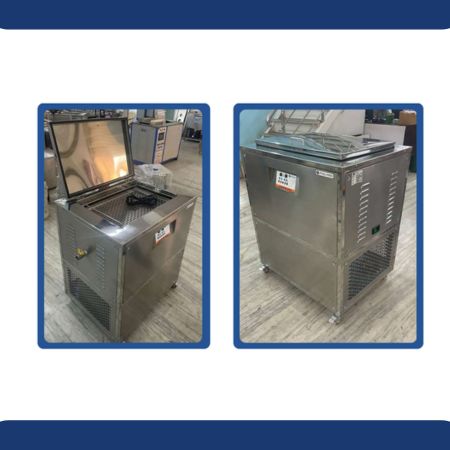
Modern biotechnology and nanotechnology laboratories require precise processing conditions, especially when working with heat-sensitive samples. During ultrasonic processing, excessive heat can damage proteins, enzymes, DNA, or delicate nanomaterials. This is why a Sonicator with Chiller has become an essential part of many research workflows.
A sonicator uses high-frequency ultrasonic waves to create cavitation inside liquids. When combined with an integrated cooling system, it allows researchers to maintain stable temperatures during processing, improving both sample safety and experimental consistency.
Today, advanced systems from manufacturers such as Athena Instruments are widely used in biotech laboratories, pharmaceutical research, and nanotechnology applications where controlled temperature sonication is critical.
Understanding How a Sonicator with Chiller Works
A laboratory sonicator operates through the ultrasonic cavitation process. High-frequency sound waves, commonly around 33 KHz, generate microscopic cavitation bubbles inside a liquid medium. These bubbles rapidly collapse and release energy capable of disrupting cells, dispersing particles, and homogenising solutions.
However, cavitation also generates heat. During extended sonication, temperatures can rise quickly and affect sample integrity.
An integrated chiller solves this problem by maintaining controlled temperatures, typically between 5°C and 25°C. This cooling system prevents overheating and helps preserve heat-sensitive samples during processing.
Modern systems often include:
- Imported PZT sandwich transducers for efficient ultrasonic energy generation
- Pulse sweep power for uniform ultrasonic energy distribution
- MOSFET/IGBT based SMPS modules for stable performance
- Degassing mode to improve cavitation efficiency
These features improve consistency in biotechnology and nanotechnology workflows.
Importance of Temperature-Controlled Sonication in Biotechnology
Temperature control plays a major role in sonication in biotechnology because biological samples can degrade rapidly when exposed to excess heat.
Protein Extraction and Cell Lysis
Researchers commonly use an ultrasonic homogeniser for protein extraction and ultrasonic cell disruption. Controlled cooling helps preserve protein structure during cell lysis procedures.
DNA and RNA Processing
In genomics research, sonication is widely used for DNA shearing. Stable temperatures reduce the risk of nucleic acid degradation and improve reproducibility.
Pharmaceutical Research
In pharmaceutical formulations, controlled sonication supports molecular dispersion and stable nanoemulsions while preventing thermal damage to active compounds.
For long-duration processing, cooling systems are particularly important because they maintain sample integrity throughout the workflow.
Applications in Nanotechnology
The use of sonication in nanotechnology continues to expand across advanced material research.
Nanoparticle Dispersion
Nanoparticles tend to cluster together during storage and processing. A sonicator with chiller helps create stable and uniform dispersions without overheating the sample.
Carbon Nanotube and Graphene Processing
Researchers working with graphene and carbon nanotubes rely on controlled ultrasonic processing to achieve consistent molecular dispersion while protecting material structure.
Nano Emulsions and Particle Size Reduction
Temperature-controlled sonication is also used for:
- Nano emulsions
- Particle size reduction
- Nanomaterial synthesis
- Sonochemical reactions
Stable temperatures improve nanoparticle consistency and processing accuracy.
Key Features That Improve Laboratory Performance
A well-designed temperature controlled sonicator improves both efficiency and reliability in research environments.
SS 304 Fabricated Tank
An SS 304 chamber offers chemical resistance, durability, and easier maintenance for laboratory use.
Pulse Sweep Power
Pulse sweep technology distributes ultrasonic energy more evenly, reducing hot spots and improving cavitation performance.
Degassing Mode
The built-in degassing mode removes dissolved gases from liquids before processing, improving cavitation efficiency and cleaning performance.
Compact and Durable Design
Modern systems are designed for continuous laboratory operation with timer settings ranging from 1 to 99 minutes, making them suitable for daily research workflows.
Sonicator with Chiller vs Conventional Sonication Systems
| Feature | Sonicator with Chiller | Conventional Sonicator |
| Temperature Control | Stable cooling | Heat build-up |
| Sample Protection | Better for heat-sensitive samples | Higher risk of degradation |
| Long Processing Cycles | Suitable | Limited |
| Processing Consistency | More uniform | Less stable |
For biotechnology and nanotechnology applications, integrated cooling systems offer better research reliability and sample safety.
Industries Using Sonicator with Chiller Systems
A wide range of industries now use ultrasonic sonicator with chiller systems, including:
- Biotechnology laboratories
- Pharmaceutical companies
- Nanotechnology research centres
- Universities and research institutes
- Food and chemical laboratories
These systems are commonly used for protein extraction, nanoparticle dispersion, molecular mixing, and ultrasonic extraction processes.
How to Choose the Right Sonicator with Chiller
When selecting a lab-grade sonication equipment, researchers should consider:
- Tank capacity
- Ultrasonic frequency
- Cooling range
- Operating duration
- Material quality
- Application type
The choice between a probe sonicator vs bath sonicator depends on whether direct or indirect sonication is required.
For sensitive samples, an ultrasonic bath with chiller often provides gentler and more uniform processing conditions.
Future of Ultrasonic Sonication in Research
Ultrasonic processing continues to play a growing role in:
- Precision medicine
- Nanomedicine
- Advanced material science
- Pharmaceutical innovation
- Sustainable processing technologies
As research demands become more advanced, the need for precise and controlled ultrasonic processing will continue to increase.
Precision Sonication for Modern Research Laboratories
A Sonicator with Chiller offers significant advantages for biotechnology and nanotechnology laboratories by combining ultrasonic processing with stable temperature control.
From protein extraction and DNA shearing to nanoparticle dispersion and nanoemulsions, controlled sonication improves accuracy, consistency, and sample protection.
With advanced features such as PZT transducers, pulse sweep power, degassing mode, and durable SS 304 construction, modern systems support reliable laboratory performance across a wide range of research applications.
For laboratories seeking dependable ultrasonic bath systems with integrated cooling, Athena Instruments provides advanced solutions designed for scientific and industrial research environments.
FAQs
What is a Sonicator with Chiller used for?
It is used for ultrasonic processing applications such as cell disruption, nanoparticle dispersion, emulsification, and DNA shearing while maintaining controlled temperatures.
Why is cooling important during sonication?
Cooling prevents overheating, which can damage proteins, enzymes, and other heat-sensitive samples.
What is ultrasonic cavitation?
Ultrasonic cavitation is the formation and collapse of microscopic bubbles generated by ultrasonic waves in liquids.
Can sonication damage biological samples?
Yes. Excessive heat during sonication may damage biological materials if cooling is not properly maintained.
What industries use ultrasonic sonicators?
Biotechnology, pharmaceutical, nanotechnology, food research, and chemical industries commonly use ultrasonic sonication systems.
What is the ideal temperature for sonication?
Most biological applications are performed between 5°C and 25°C to maintain sample stability.


