Gas chromatography laboratories are increasingly replacing helium with Hydrogen Carrier Gas for GC Systems because it offers faster analysis, dependable availability and lower long-term operating costs. Helium shortages and price fluctuations have encouraged many laboratories to review their carrier gas strategy, while advances in on-site hydrogen generation have made hydrogen a practical and safe alternative for many GC applications.
For laboratories aiming to improve productivity without compromising analytical performance, hydrogen is becoming an increasingly attractive carrier gas.
What Is Hydrogen Carrier Gas for GC Systems?
In gas chromatography (GC), the carrier gas transports the sample through the chromatographic column, where individual compounds separate before reaching the detector.
Hydrogen is one of the commonly used carrier gases alongside helium and nitrogen. Thanks to its favourable physical properties, hydrogen allows analytes to move through the column more efficiently, often reducing retention times while maintaining excellent chromatographic separation.
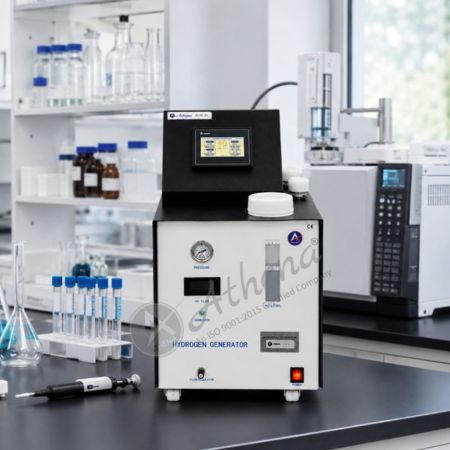
When produced using a hydrogen gas generator, laboratories can generate a continuous supply of high-purity hydrogen on demand instead of relying on compressed gas cylinders.
Why Are Laboratories Moving Away from Helium?
Helium has been the preferred GC carrier gas for many years. However, supply challenges have changed how laboratories evaluate their analytical operations.
Several factors are influencing this shift:
- Rising global helium prices
- Periodic supply shortages
- Increasing laboratory operating costs
- Pressure to improve analytical throughput
- Greater focus on laboratory automation and sustainability
For laboratories processing hundreds of samples every week, delays caused by gas availability can affect instrument uptime and productivity. This has encouraged many organisations to consider Hydrogen Carrier Gas for GC Systems as a reliable alternative.
7 Reasons Modern Laboratories Are Switching to Hydrogen Carrier Gas for GC Systems
1. Faster Analysis Without Sacrificing Separation
Hydrogen has a higher optimal linear velocity than helium, allowing samples to pass through the GC column more quickly.
In routine pharmaceutical, food testing and environmental laboratories, this often translates into shorter run times while maintaining good chromatographic resolution.
Higher sample throughput means analysts can complete more work during a normal working day.
2. Excellent Chromatographic Efficiency
Hydrogen provides high diffusion rates, helping improve mass transfer within the column.
When methods are properly optimised, laboratories can achieve sharp peak shapes, consistent retention times and reliable detector sensitivity across a wide range of analytical applications.
3. Lower Long-Term Operating Costs
Cylinder rental, transportation and helium price increases can significantly affect laboratory budgets.
A hydrogen generator for gas chromatography produces hydrogen on-site using only double distilled water, reducing dependence on delivered gas cylinders and helping laboratories manage operating costs more effectively.
4. Continuous Gas Availability
Unexpected cylinder depletion can interrupt sample analysis and delay reporting.
An electrolytic hydrogen generator provides a continuous hydrogen supply, helping maintain instrument uptime throughout the working day.
This is particularly valuable in quality assurance, quality control and research laboratories where uninterrupted analysis is essential.
5. Improved Laboratory Productivity
Modern laboratories often operate multiple GC systems simultaneously.
Reliable on-site hydrogen generation reduces the time spent ordering, changing and handling gas cylinders, allowing laboratory staff to focus on analytical work rather than routine gas management.
6. Supports Sustainable Laboratory Operations
Reducing cylinder deliveries also lowers transport requirements and storage needs.
Generating hydrogen on-site minimises waste associated with cylinder logistics while supporting laboratories working towards more sustainable operational practices.
7. Eliminates Bulky Gas Cylinders
Compressed gas cylinders require dedicated storage, manual handling and regular replacement.
A compact high purity hydrogen generator frees valuable laboratory space and reduces many of the practical challenges associated with cylinder management.
Is Hydrogen Safe to Use in Gas Chromatography?
Hydrogen is flammable, so appropriate laboratory safety procedures remain essential.
Modern hydrogen generators have significantly improved how laboratories use hydrogen safely. Unlike large compressed cylinders, they generate only the amount of hydrogen required for analysis.
Systems based on advanced electrolytic membrane technology continuously produce high-purity hydrogen while incorporating multiple safety features designed for laboratory operation.
Proper installation, ventilation and routine maintenance remain important regardless of the carrier gas being used.
How On-Site Hydrogen Generation Supports Modern Laboratories
Many laboratories are now replacing cylinder supplies with dedicated hydrogen generation systems.
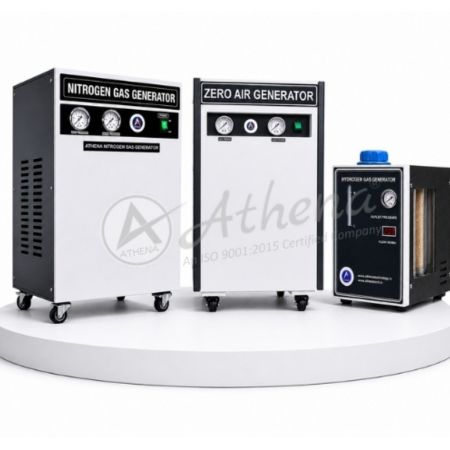
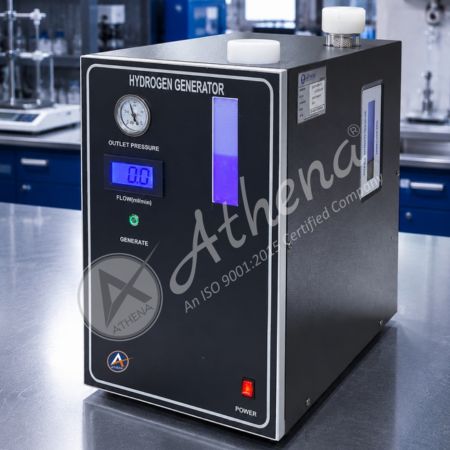
The ATH Series Hydrogen Gas Generator from Athena Instruments uses advanced electrolytic membrane technology to produce hydrogen with a purity greater than 99.999%, making it suitable for demanding gas chromatography applications.
Rather than storing large gas cylinders, laboratories generate hydrogen only when required. The system requires only double distilled water, offers low maintenance requirements and provides reliable long-term operation.
Available models such as the ATH-300, ATH-500 and ATH-1000, along with higher-flow configurations, support laboratories with different analytical workloads.
The generators are compatible with GC-FID, GC-TCD, GC-FPD, GC-NPD and GC-ELCD systems, providing flexibility across a wide range of analytical laboratories.
For laboratories looking to improve efficiency while maintaining analytical quality, Athena Instruments offers an approach that combines continuous gas availability with dependable laboratory performance. As analytical workloads continue to increase, solutions from Athena Instruments help reduce interruptions caused by cylinder management without changing established GC workflows.
Choosing the Right Hydrogen Generator
Not every laboratory has identical analytical requirements.
When selecting a hydrogen generator for GC, consider the following:
- Required hydrogen purity for your analytical methods
- Total flow rate based on the number of GC instruments
- Instrument compatibility with existing GC systems
- Reliability during continuous laboratory operation
- Ease of routine maintenance
- Future laboratory expansion plans
A generator matched to the laboratory workload helps maintain consistent instrument performance while reducing unnecessary operating costs.
Why Hydrogen Is Becoming the Preferred Choice for Modern GC Laboratories
The move towards Hydrogen Carrier Gas for GC Systems reflects practical laboratory needs rather than changing trends. Faster analysis, dependable gas availability, lower operating costs and improved laboratory efficiency make hydrogen an attractive option for many analytical applications.
Advances in on-site generation have also addressed many of the concerns associated with hydrogen supply. Systems such as the ATH Series Hydrogen Gas Generator from Athena Instruments demonstrate how laboratories can obtain high-purity hydrogen safely and reliably while reducing reliance on gas cylinders.
If your laboratory is reviewing its GC carrier gas strategy, learning more about on-site hydrogen generation can help determine whether it is the right fit for your analytical workload.
Frequently Asked Questions
Q1. What is Hydrogen Carrier Gas for GC Systems?
Answer: Hydrogen is a carrier gas used in gas chromatography to transport samples through the analytical column for separation before detection.
Q2. Is hydrogen better than helium for gas chromatography?
Answer: For many GC applications, hydrogen offers faster analysis and lower operating costs. Method suitability should always be verified for each application.
Q3. Is hydrogen safe for laboratory GC systems?
Answer: Yes. Modern hydrogen generators produce hydrogen on demand with integrated safety features. Safe installation and laboratory procedures remain essential.
Q4. What purity is required for GC carrier gas?
Answer: Most analytical laboratories use hydrogen with a purity of greater than 99.999% to maintain consistent analytical performance.
Q5. Can hydrogen generators replace gas cylinders?
Answer: In many laboratories, yes. On-site hydrogen generation reduces dependence on cylinder deliveries while providing continuous gas availability.
Q6. Which laboratories benefit most from hydrogen generation?
Answer: Pharmaceutical, food testing, environmental, petrochemical, research and quality control laboratories frequently benefit from on-site hydrogen generation.