

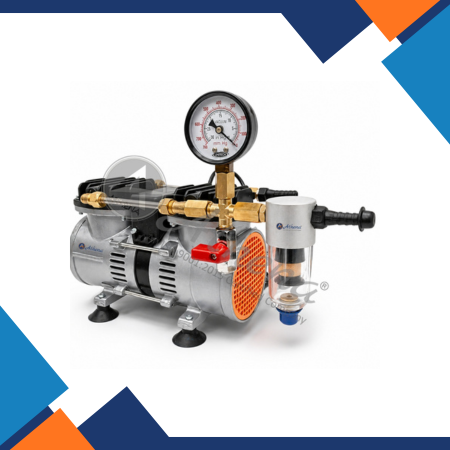
The applications of oil free vacuum pumps continue to expand across laboratories and research facilities where contamination control, process stability, and precision matter. Unlike oil-sealed systems, oil free vacuum pumps generate vacuum without lubricants entering the pumping chamber, supporting clean and reliable vacuum generation for sensitive scientific work. This contamination-free operation is particularly important in analytical laboratories, pharmaceutical research, and advanced testing environments where even trace hydrocarbons can affect data quality or compromise samples.
Laboratories increasingly prefer dry pumping technology because it aligns with modern demands for laboratory safety, low-maintenance vacuum systems, and environmental compliance. From routine filtration processes to advanced vacuum drying and analytical instrumentation, oil free pumps have become integral precision research equipment across scientific disciplines.
What Are Oil Free Vacuum Pumps and How Do They Work?
Oil free vacuum pumps are dry vacuum systems designed to create vacuum without oil lubrication in the compression chamber. Instead of using oil for sealing and lubrication, they rely on technologies such as diaphragm pumps, scroll pumps, dry screw pumps, and other rotary vane alternatives engineered for clean vacuum performance.
The operating principle varies by design, but all support vacuum generation through dry mechanical movement that evacuates air or gases while preventing oil backstreaming. This eliminates one of the longstanding risks associated with conventional vacuum systems in laboratories sample contamination from oil vapors.
For laboratory applications, chemical resistance often plays an equally important role. Many oil free pumps are designed with corrosion-resistant wetted materials to handle solvents, aggressive vapors, and moisture-heavy applications common in research environments.
Why Laboratory and Research Facilities Prefer Oil Free Vacuum Pumps
Research facilities choose oil free vacuum pumps because performance in scientific environments is often measured by purity, repeatability, and uptime. Oil-sealed systems may perform well in industrial duty, but laboratories frequently need contamination-free vacuum systems that protect both experiments and instrumentation.
In analytical settings, avoiding hydrocarbon contamination improves instrument reliability and supports accurate measurements. In pharmaceutical and biotech research, oil free pumps help maintain controlled conditions needed for regulated processes. Laboratories also value reduced maintenance, since dry pumps eliminate oil changes, waste oil disposal, and many service interruptions associated with conventional systems.
Another major factor is safety. Oil-free pumping reduces exposure risks tied to oil mist emissions and simplifies compliance in facilities focused on clean operations and sustainable laboratory practices.
Key Applications of Oil Free Vacuum Pumps in Laboratory and Research Facilities
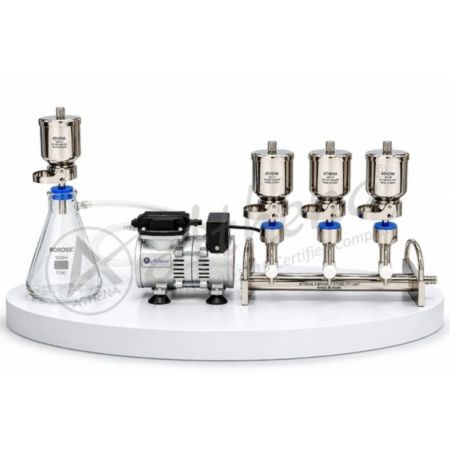
The broad range of laboratory vacuum pump applications reflects how deeply vacuum supports scientific workflows. In sample preparation laboratories, oil free pumps are widely used for filtration processes involving microbiology, chemistry, and environmental testing. Stable vacuum improves throughput while protecting sample integrity.
Common applications include:
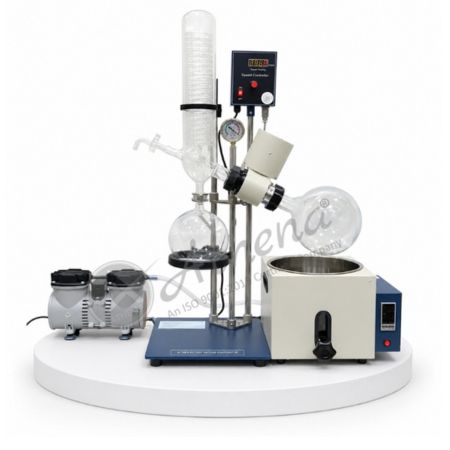
- Sample filtration, vacuum drying, solvent evaporation, and vacuum distillation where clean vacuum conditions support reproducible results
- Analytical instruments such as mass spectrometers, spectrometers, chromatography systems, and other precision research equipment requiring stable vacuum support
- Pharmaceutical research, sterilization systems, biotech processing, chemical laboratories, and environmental testing facilities where contamination-free operation is critical
In analytical laboratories, dry vacuum pumps often support instruments continuously. Here, vacuum stability directly affects performance. A poorly maintained oil-sealed system can introduce particulates or oil vapors that impact detector sensitivity, while oil free systems help preserve analytical consistency.
Pharmaceutical and biotech facilities use dry vacuum pumps for research facilities in freeze drying support, filtration manifolds, fermentation systems, and sterile process environments. Their clean operation supports GMP-sensitive applications where contamination control is non-negotiable.
Chemical laboratories rely on chemical-resistant oil free pumps for corrosive vapors and solvent handling. This is where dry pumping technology offers practical advantages over conventional rotary vane systems, particularly in aggressive chemical duty.
Environmental testing laboratories also depend on these pumps in air sampling, water analysis, and trace contaminant studies where clean vacuum conditions are directly tied to credible data.
Across these diverse laboratory vacuum pump applications, Athena Instruments works with research and industrial laboratories to support contamination-free vacuum requirements with dependable oil free pumping solutions.
Advantages of Oil Free Vacuum Pumps Over Traditional Oil-Sealed Systems
The benefits of oil free vacuum pumps extend beyond contamination control. Their value often lies in reducing operational complexity while improving laboratory performance.
Traditional oil-sealed systems can require routine oil changes, filtration replacement, waste handling, and monitoring for backstreaming risks. In laboratories, these maintenance demands can interrupt workflows or increase total ownership costs.
Oil free pumps reduce those burdens while offering cleaner exhaust, lower risk of sample interference, and often quieter operation. Many laboratories also see advantages in chemical compatibility and lower lifecycle maintenance.
From a process perspective, dry systems support cleaner vacuum generation for contamination-sensitive procedures while reducing environmental concerns tied to used oil disposal. For facilities prioritizing sustainability and environmental compliance, that matters as much as performance.
Role of Oil Free Vacuum Pumps in Contamination-Sensitive Research
Contamination-sensitive research often drives the strongest case for oil free pumps. In trace analysis, pharmaceutical development, semiconductor-related research, and molecular biology, contamination can invalidate entire experiments.
Oil-sealed pumps introduce risks through oil vapor migration or particulate carryover. Even minimal contamination may affect sensitive analytical instruments or biological materials. Oil free pumps for scientific laboratories reduce these risks by separating vacuum generation from lubricants entirely.
This matters particularly in pharmaceutical research, where contamination control supports both regulatory requirements and research integrity. It also matters in analytical laboratories where background contamination can alter readings at extremely low detection limits.
For contamination-free vacuum systems, the benefit is not simply cleaner pumping—it is confidence in experimental conditions.
How to Select the Right Oil Free Vacuum Pump for Laboratory Use
Selecting a laboratory vacuum pump depends on process requirements more than pump type alone. Vacuum level, chemical compatibility, flow rate, duty cycle, and noise constraints all influence the right choice.
Key evaluation factors include the following:
- Required ultimate vacuum, pumping speed, and whether the application is continuous or intermittent
- Compatibility with solvents, corrosive vapors, moisture loads, and the specific analytical or process equipment connected to the system
- Maintenance expectations, energy efficiency, laboratory safety standards, and future scalability for research growth
A filtration manifold may perform well with a diaphragm pump, while high-vacuum analytical instruments may require scroll or dry screw technology. Matching the pump to the application prevents overspecification while protecting long-term performance.
Procurement teams increasingly also evaluate service support and lifecycle costs rather than purchase price alone, especially in research facilities where downtime can be more expensive than equipment.
Common Industries and Research Segments Using Oil Free Vacuum Pumps
Oil free vacuum pumps in laboratories serve a wide range of sectors beyond academic research. Pharmaceutical manufacturing and R&D remain major users, particularly for sterile processes, filtration, and analytical support.
Universities and institutional laboratories use them extensively in chemistry, biology, materials science, and engineering research. Industrial laboratories rely on them for quality control, environmental monitoring, and product testing.
Food laboratories, medical device development facilities, electronics research, and environmental agencies also use dry vacuum systems where contamination-free operation and reliability are essential. Their adoption continues to grow as research equipment becomes more sensitive and compliance expectations increase.
Maintenance and Performance Considerations
Although often described as low maintenance vacuum systems, oil free pumps still require performance oversight. Filters, seals, diaphragms, and wear components must be inspected based on duty conditions.
Performance life depends heavily on proper pump selection and operating practices. Solvent-rich processes may require condensate management. Corrosive applications may benefit from chemical-resistant materials or protective accessories. Routine preventive maintenance protects vacuum stability and extends service life.
Laboratories should also monitor pump sizing. Oversized systems can waste energy, while undersized pumps may struggle under continuous loads, affecting both process reliability and equipment life.
Future Trends in Oil Free Vacuum Technology for Research Facilities
Oil free vacuum technology is advancing in response to automation, sustainability targets, and increasingly specialized research demands. One trend is integration with smart monitoring systems that track performance, maintenance intervals, and process conditions in real time.
Another shift involves higher chemical resistance and improved dry pumping technologies capable of handling more aggressive laboratory processes. Energy efficiency is also becoming a stronger purchasing factor, especially in large research facilities operating multiple vacuum systems.
There is also a growing movement away from legacy rotary vane alternatives in favour of cleaner dry technologies designed specifically for precision laboratory environments. As research instrumentation evolves, vacuum systems are increasingly expected to function as integrated process components rather than simple utilities.
Building More Reliable Laboratories with Oil Free Vacuum Pumps
The growing use of applications of oil free vacuum pumps across laboratories reflects a broader shift toward cleaner, more reliable, and lower-maintenance vacuum solutions. Their role in analytical instruments, pharmaceutical research, contamination-sensitive processes, and advanced laboratory operations continues to expand because they solve both technical and operational challenges.
For facilities evaluating vacuum systems, the decision often extends beyond pump performance into research integrity, compliance, maintenance efficiency, and long-term reliability. Athena Instruments supports these requirements with engineered vacuum solutions designed for laboratory and industrial precision applications.
Frequently Asked Questions
Q1. Why are oil free vacuum pumps used in laboratories?
Answer: Oil free vacuum pumps are used in laboratories because they provide clean vacuum generation without oil contamination. This protects samples, supports analytical accuracy, reduces maintenance, and improves laboratory safety.
Q2. Are oil free vacuum pumps better for research applications?
Answer: For many research applications, yes. They are often preferred where contamination control, precision, chemical resistance, and low maintenance are priorities, particularly in pharmaceutical, analytical, and life science environments.
Q3. What industries use dry vacuum pumps?
Answer: Dry vacuum pumps are used in pharmaceuticals, biotechnology, universities, chemical laboratories, environmental testing, electronics research, industrial laboratories, and medical device development.
Q4. How do oil free vacuum pumps prevent contamination?
Answer: They prevent contamination by eliminating oil from the pumping chamber, removing risks associated with oil backstreaming, vapour migration, and hydrocarbon exposure in sensitive processes.
Q5. Which laboratory applications need oil free vacuum systems?
Answer: Applications such as sample filtration, vacuum drying, analytical instrumentation support, vacuum distillation, sterilisation systems, and contamination-sensitive research commonly benefit from oil free vacuum systems.