

Gas chromatography plays a central role in analytical laboratories where precise separation and quantification of compounds are essential. Whether in pharmaceuticals, petrochemicals, environmental testing, or food analysis, the accuracy of results depends heavily on the stability and purity of the carrier and support gases used within the system.
Traditionally, laboratories have relied on high-pressure gas cylinders to supply nitrogen. While effective, this approach introduces variability, safety concerns, and recurring operational costs. Nitrogen gas generators for gas chromatography have emerged as a more controlled and efficient alternative, enabling laboratories to produce high-purity nitrogen on demand.
This shift is not simply about convenience. It directly influences gas chromatography performance optimisation by improving baseline stability, reducing contamination risks, and ensuring consistent analytical conditions over time.
Role of Nitrogen in Gas Chromatography
Nitrogen is widely used in gas chromatography as a carrier gas and as a support gas for detectors such as flame ionisation detectors and electron capture detectors. Its inert nature allows it to transport analytes through the column without reacting with them, which is essential for accurate separation.
The effectiveness of nitrogen in GC applications depends on three critical parameters: purity, flow rate, and stability. High purity nitrogen for labs minimises background noise and prevents interference with sensitive detectors. Stable flow rates ensure reproducible retention times, which is essential for method validation and regulatory compliance. Even minor fluctuations can lead to inconsistent results, particularly in high-precision environments.
Because of these requirements, the source of nitrogen becomes as important as the instrument itself.
What is a nitrogen gas generator?
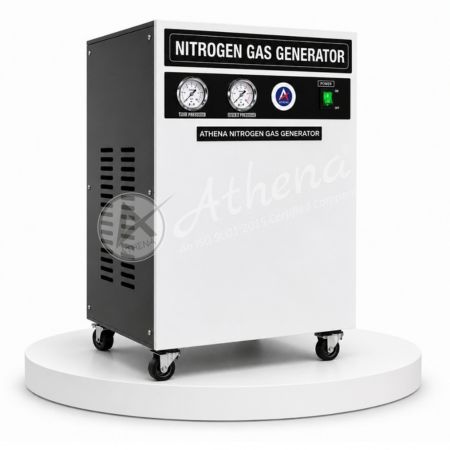
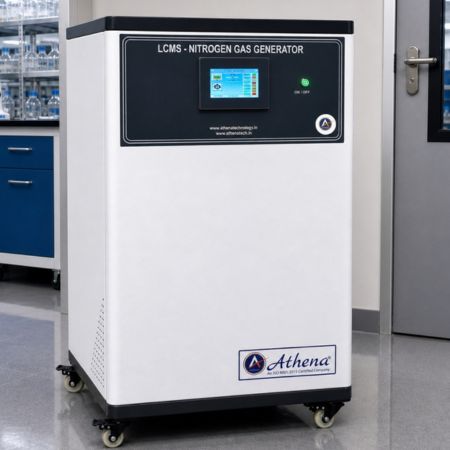
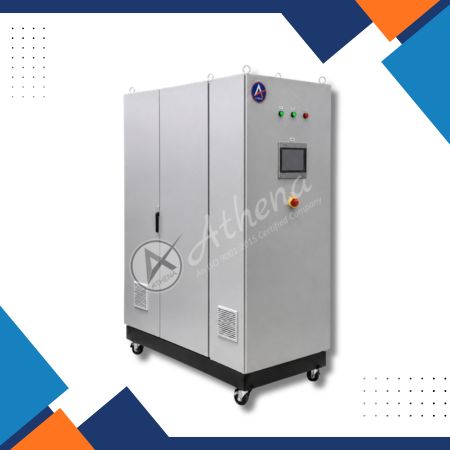
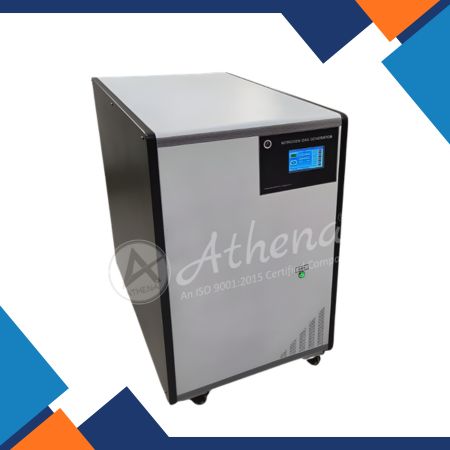
A nitrogen gas generator is an on site system designed to produce nitrogen from compressed air. It eliminates the need for stored gas cylinders by generating nitrogen continuously at the point of use.
Most laboratory grade systems operate using pressure swing adsorption technology or membrane separation. In PSA systems, compressed air passes through carbon molecular sieves that selectively adsorb oxygen and other impurities, leaving behind high-purity nitrogen. Membrane systems use selective permeation to separate nitrogen from oxygen based on molecular size and diffusion rates.
These technologies allow laboratories to control both purity and flow rate, aligning the gas supply precisely with the requirements of gas chromatography systems.
Key Ways Nitrogen Gas Generators Improve GC Performance
Nitrogen gas generators for gas chromatography improve analytical performance by addressing the limitations associated with traditional gas supply methods.
- Consistent purity levels are maintained throughout operation, which reduces baseline drift and enhances peak resolution. This is particularly important for trace level analysis, where even small impurities can affect results.
- Stable and adjustable flow rates support reproducible retention times and improve method reliability. Unlike cylinders, which experience pressure drops as they empty, generators provide continuous and steady output.
- Reduced contamination risks arise from eliminating cylinder handling and exposure to ambient conditions. On site generation minimises the chance of introducing moisture, hydrocarbons, or particulate matter into the system.
- Improved detector sensitivity is achieved because high-purity nitrogen enhances signal to noise ratios. This directly contributes to more accurate quantification and lower detection limits.
Operational efficiency increases as laboratories no longer need to manage cylinder inventory, monitor pressure levels, or interrupt workflows for gas replacement.
Together, these factors contribute to more reliable and repeatable analytical outcomes.
Nitrogen Generator vs Gas Cylinders for GC
The comparison between nitrogen generators vs cylinders highlights why many laboratories are transitioning to onsite generation.
- Cost comparison shows that cylinders involve recurring expenses related to refilling, transportation, and rental. Generators require an upfront investment but deliver significant nitrogen generator cost savings over time.
- Safety differences are substantial. Cylinders store gas at high pressure and pose risks during handling and storage. Generators eliminate these hazards by producing gas at lower pressures.
- Reliability improves with generators since there is no dependency on external supply chains. Laboratories maintain continuous operation without delays caused by cylinder shortages.
- Workflow efficiency is enhanced because staff spend less time managing gas logistics and more time focusing on analytical work.
Safety and Compliance Advantages
Safety is a critical consideration in laboratory environments. High-pressure gas cylinders introduce risks related to leaks, handling accidents, and storage constraints. Nitrogen generators remove these risks by producing gas on demand and at controlled pressures.
Improved safety conditions also support compliance with laboratory regulations and standards. Many organisations are moving towards safer infrastructure designs that minimise hazardous materials. On site nitrogen generation aligns well with these requirements and simplifies audits and inspections.
Choosing the Right Nitrogen Generator for GC Applications
Selecting the appropriate system requires a clear understanding of laboratory needs and analytical demands.
- Flow rate requirements should match the total consumption of all connected GC systems to ensure uninterrupted operation.
- Purity levels must align with the sensitivity of the detectors and the complexity of the analyses being performed.
- Compatibility with existing GC systems ensures seamless integration without modifications or performance compromises.
- Scalability allows laboratories to expand capacity as workloads increase, making the investment future-ready.
- Careful evaluation of these factors helps laboratories achieve optimal performance and return on investment.
Why Laboratories are Shifting to On Site Nitrogen Generation
The transition towards nitrogen generators reflects broader changes in laboratory operations. There is a growing emphasis on reliability, cost control, and sustainability.
On site generation reduces dependence on external suppliers and transportation networks, which enhances operational independence. It also contributes to sustainability goals by lowering the carbon footprint associated with gas delivery and cylinder production.
Many laboratories across pharmaceuticals, environmental testing, and industrial research are adopting this approach as a standard practice. Companies such as Athena Instruments have played a role in advancing this transition by providing systems designed for consistent performance and global application.
The Future of Gas Chromatography with Nitrogen Gas Generators
Nitrogen gas generators for gas chromatography are shaping a more stable and efficient analytical environment. Their ability to deliver consistent purity, controlled flow, and uninterrupted supply directly supports high quality results across a wide range of applications.
As laboratories continue to refine gas chromatography performance optimization strategies, on site nitrogen generation is becoming a standard component rather than an optional upgrade. It aligns with the need for precision, operational reliability, and cost control in modern analytical settings.
With ongoing advancements in generator technology and increasing adoption across industries, solutions developed by experienced manufacturers such as Athena Instruments reflect the direction in which laboratory infrastructure is evolving, where performance, safety, and efficiency work together as a unified system.
FAQs
Q1. What is the role of nitrogen in gas chromatography?
Answer: Nitrogen acts as a carrier gas and detector support gas in gas chromatography. It transports analytes through the column without reacting with them and helps maintain stable analytical conditions. High purity nitrogen improves accuracy by reducing background noise and enhancing detector sensitivity.
Q2. Why are nitrogen gas generators better than cylinders for GC?
Answer: Nitrogen generators provide a continuous and stable supply of gas, eliminating the variability and logistical challenges associated with cylinders. They improve reliability, reduce contamination risks, and offer long term cost savings, making them a preferred choice for modern laboratories.
Q3. What purity level of nitrogen is required for gas chromatography?
Answer: Most gas chromatography applications require nitrogen purity levels between 95 percent and 99.999 percent, depending on the detector and analysis type. Higher purity is essential for sensitive applications to ensure accurate and reproducible results.
Q4. How do nitrogen gas generators improve GC performance?
Answer: Nitrogen gas generators enhance performance by delivering consistent purity, stable flow rates, and reduced contamination. These factors lead to better peak resolution, improved baseline stability, and more reliable analytical outcomes.