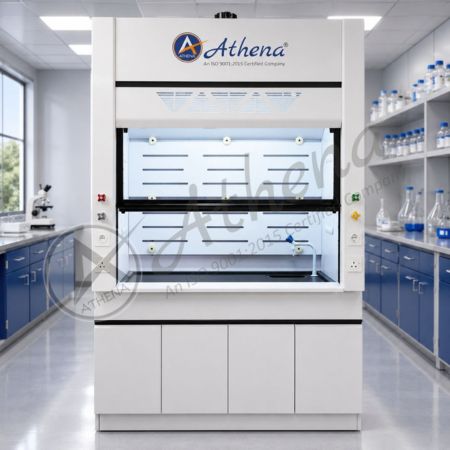
Working with chemicals requires more than careful handling it starts with creating a safe laboratory environment. A fume hood is one of the most important pieces of laboratory safety equipment because it helps capture and remove hazardous vapours, fumes, and airborne contaminants before they reach laboratory personnel.
However, not every laboratory fume hood is built for the same purpose. The chemicals being handled, the laboratory layout, ventilation requirements, and construction quality all influence which model is best suited for a particular application. Understanding these factors before investing can improve safety, simplify maintenance, and provide reliable performance for years.
Why the Right Fume Hood Makes a Difference
A laboratory fume hood is designed to provide controlled airflow that directs potentially harmful fumes away from the user and safely exhausts them from the workspace. While this may seem straightforward, the effectiveness of a fume hood depends on how well its design matches the laboratory’s daily operations.
Selecting the right unit helps laboratories:
- Improve operator safety during chemical handling.
- Reduce exposure to hazardous vapours.
- Support cleaner laboratory environments.
- Minimise maintenance issues through durable construction.
For research laboratories, pharmaceutical facilities, educational institutions, and quality control labs, choosing the correct laboratory ventilation solution is an important long-term investment rather than simply another equipment purchase.
Start with Your Laboratory Application
Before comparing specifications, identify how the fume hood will be used.
A laboratory conducting routine sample preparation has different requirements from a facility working with corrosive chemicals or volatile solvents. Understanding the intended application makes it easier to evaluate airflow, internal materials, and utility requirements.
Questions worth considering include:
- Which chemicals will be handled regularly?
- How many users will operate the hood each day?
- Does the laboratory have an existing exhaust system?
- Will additional gas, water, or electrical connections be required inside the workspace?
Answering these questions early helps narrow down the most suitable configuration.
Construction quality matters more than many buyers realize.
The materials used in a fume hood directly influence its durability, resistance to chemicals, and ease of maintenance.
Athena Instruments manufactures floor-mounted laboratory fume hoods using a heavy-duty electro-galvanized sheet with a durable powder-coated exterior. This combination provides improved resistance to laboratory wear while maintaining an attractive finish even after years of regular use.
Inside the enclosure, chemical-resistant and fire-retardant panels create a safer working environment for laboratories that routinely handle reactive substances. Smooth interior surfaces also make routine cleaning more practical by reducing the accumulation of chemical residues and dust.
Rather than focusing only on appearance, buyers should evaluate how the construction supports long-term laboratory performance.
Airflow Is the Heart of Every Laboratory Fume Hood
Even the strongest construction cannot compensate for poor airflow.
An effective laboratory fume hood should maintain consistent air movement that captures fumes before they spread into the laboratory. This is where airflow design becomes one of the most important buying considerations.
Athena Instruments incorporates an auto-bypass airflow system along with a three-point baffle suction arrangement. Together, these features help distribute airflow more evenly across the working area, supporting efficient exhaust of light, normal, and relatively heavier fumes.
While laboratories often compare physical dimensions, airflow performance should receive equal attention because it directly affects containment efficiency and operator safety.
| Feature | Why It Matters |
| Auto bypass airflow | Supports consistent airflow during operation |
| Three-point baffle system | Promotes uniform exhaust across the work area |
| Chemical-resistant interior | Suitable for handling a wide range of laboratory chemicals |
| Powder-coated exterior | Improves durability and corrosion resistance |
| Utility fittings | Simplifies day-to-day laboratory operations |
Utility Integration Improves Daily Workflow
Modern laboratories rely on more than ventilation alone.
Many experiments require convenient access to utilities such as gas, water, and electrical connections without interrupting laboratory procedures.
Integrated utility line fittings and electrical receptacles can reduce unnecessary movement during experiments, helping researchers work more efficiently while keeping frequently used services within easy reach.
When evaluating different manufacturers, considering these practical details often makes a noticeable difference in day-to-day laboratory operations.
Common Mistakes to Avoid When Buying a Fume Hood
Choosing a laboratory fume hood based only on price can lead to higher operating costs over time. Several common mistakes can easily be avoided with careful planning.
- Ignoring airflow design and focusing only on dimensions.
- Selecting construction materials without considering chemical compatibility.
- Overlooking future laboratory expansion or workflow changes.
- Choosing equipment without evaluating maintenance accessibility.
A well-planned purchase generally provides better long-term value than replacing equipment prematurely.
Why Manufacturer Experience Should Also Be Considered
A laboratory fume hood is expected to perform reliably every day, often under demanding conditions. Beyond technical specifications, the manufacturer’s experience, quality control, and product support contribute significantly to long-term performance.
Athena Instruments designs and manufactures laboratory equipment with a focus on durable construction, practical functionality, and laboratory safety. Features such as a heavy-duty electro-galvanized structure, powder-coated finish, chemical-resistant interior, and thoughtfully designed airflow system reflect an understanding of the needs of research, educational, pharmaceutical, and industrial laboratories.
When evaluating suppliers, it is worth looking beyond brochures to assess product quality, manufacturing standards, and the availability of ongoing technical support.
Choosing with Confidence
Every laboratory has unique requirements, and the right fume hood should support both current operations and future growth. Looking beyond dimensions and price to evaluate airflow, construction quality, safety features, and practical usability often results in a more dependable investment.
If you’re planning a new laboratory or upgrading an existing one, explore the laboratory fume hood solutions from Athena Instruments. Understanding your application first and matching it with the right equipment will help create a safer, more efficient workspace for years to come.
Frequently Asked Questions
Q1. What is the primary purpose of a laboratory fume hood?
Answer: A laboratory fume hood helps protect users by capturing and exhausting hazardous chemical fumes, vapours, and airborne contaminants away from the working area, creating a safer laboratory environment.
Q2. How do I know which laboratory fume hood is right for my application?
Answer: The right choice depends on the chemicals being used, available ventilation infrastructure, workspace requirements, utility connections, and the volume of laboratory work performed each day.
Q3. Why is airflow important in a fume hood?
Answer: Proper airflow ensures hazardous fumes are effectively contained and exhausted before they reach the operator. Features such as an efficient baffle system and controlled airflow design contribute to better containment performance.
Q4. Does construction material affect the lifespan of a fume hood?
Answer: Yes. Durable materials such as heavy-duty electro-galvanized steel with a powder-coated finish and chemical-resistant interiors help improve resistance to corrosion, simplify maintenance, and extend service life.
Q5. Which industries commonly use laboratory fume hoods?
Answer: Laboratory fume hoods are widely used in pharmaceutical manufacturing, chemical industries, biotechnology laboratories, educational institutions, research facilities, environmental testing laboratories, and quality control laboratories.