

Choosing a nitrogen generator for an LC-MS system is not simply a matter of comparing purity percentages or buying the highest-capacity model available. The generator needs to match the instrument’s gas requirements, laboratory workload and operating conditions.
For laboratories using LC-MS or LC-MS/MS, a reliable nitrogen supply supports routine analytical work without the handling and replacement requirements associated with nitrogen cylinders. Here are 10 features worth checking before selecting a system.
Why Does LC-MS Need a Reliable Nitrogen Supply?
LC-MS systems use nitrogen in processes such as nebulization and desolvation, depending on the instrument configuration. The required gas flow, pressure and purity can vary between instruments and operating conditions.
For this reason, the nitrogen source should be selected using the specifications provided by the LC-MS manufacturer. A generator that provides the required gas consistently can also reduce the need to manage cylinder deliveries, storage and replacement during laboratory operations.
10 Essential Features to Check Before Choosing a Nitrogen Generator for LC-MS
1. Nitrogen Purity
Purity is one of the first specifications to check. Impurities or moisture in the gas supply can be unsuitable for sensitive analytical applications, so the generator should meet the purity level specified for your particular instrument.
Athena Instruments’ LC-MS / LC-MS-MS nitrogen gas generator offers nitrogen purity of up to 99.99%, depending on the application. The important point is to compare this specification with the requirements of your LC-MS system rather than choosing a generator based on purity alone.
2. Flow Rate and Generator Capacity
Flow rate, measured in litres per minute (LPM), determines how much nitrogen the generator can supply. An undersized system may not meet the demand of the connected instrument, while excessive capacity can add unnecessary cost.
Athena’s LC-MS generator range includes models with flow rates from approximately 6 LPM to 65 LPM, with higher capacities available on request. Always check the LC-MS manufacturer’s stated nitrogen demand before selecting the model.
3. Operating Pressure
The generator must provide pressure suitable for the connected analytical instrument. Pressure that is too low may not meet the instrument’s requirements, while the generator and installation should also be configured appropriately for safe and stable operation.
Athena’s standard configuration operates at 7 bar, with selectable configurations available for specific requirements. Confirm the required pressure in the instrument documentation before ordering.
4. Nitrogen Generation Technology
The generation method affects how nitrogen is separated from compressed air. Pressure Swing Adsorption (PSA) and membrane separation are commonly used approaches for on-site nitrogen generation.
Athena’s LC-MS / LC-MS-MS generator uses PSA and membrane nitrogen-generation technology. For a laboratory buyer, the key consideration is how the selected technology and system configuration meet the required purity, flow and operating conditions.
5. Gas Configuration
Not every laboratory requires the same gas arrangement. Depending on the analytical setup, the requirement may be for nitrogen alone or a combination such as nitrogen with zero air or dry air.
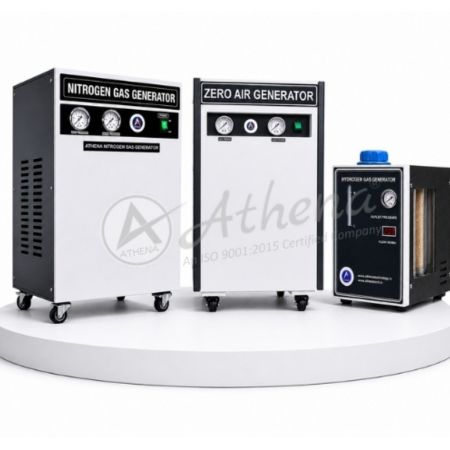
Athena offers configurations for Nitrogen, Nitrogen + Zero Air, and Nitrogen + Dry Air. Selecting the correct configuration starts with understanding the gases specified by the particular LC-MS or LC-MS/MS system.
6. Continuous 24/7 Operation
Analytical laboratories may operate instruments for long periods, particularly in pharmaceutical, environmental, food and chemical testing applications. A nitrogen generator intended for continuous operation should therefore be suitable for the laboratory’s daily workload.
Athena’s system is designed for 24/7 continuous operation. This type of setup can reduce dependence on scheduled cylinder replacement and provide an on-site gas source for laboratories with regular analytical workloads.
7. Integrated Air Treatment
The quality of the nitrogen supply also depends on how the incoming compressed air is treated. Moisture, contaminants and pressure variations can affect the gas-generation process and downstream supply.
Features such as air purification, moisture separation and pressure regulation can therefore be useful when selecting a generator. Athena’s LC-MS system integrates air-treatment functions as part of its design.
8. Monitoring and Automation
A generator should be practical for laboratory staff to operate and monitor. Automation can help reduce routine intervention and make it easier to keep track of operating conditions.
Athena’s product specifications include PLC-controlled pneumatic valves and monitoring/interface features on applicable configurations. When comparing systems, consider what parameters can be monitored and how easily operators can identify a change that requires attention.
9. LC-MS and LC-MS/MS Compatibility
Compatibility should be checked against the specific instrument model, not simply the instrument category.
Before purchasing, compare the generator’s:
- Nitrogen purity
- Flow capacity
- Operating pressure
- Gas configuration
- Connection requirements
with the specifications provided by the LC-MS manufacturer. Athena’s LC-MS / LC-MS-MS nitrogen generator is specifically designed for these analytical applications and is offered in configurations intended for different instrument requirements.
10. Maintenance, Reliability and Operating Cost
Purchase price is only one part of the cost of supplying nitrogen. Laboratories should also consider maintenance, service requirements, consumables, cylinder logistics and technical support over the expected operating period.
A generator with appropriate capacity and straightforward servicing can be easier to manage as part of routine laboratory operations. Athena Instruments provides technical support for its nitrogen-generation systems and states a 1-year manufacturer’s warranty for the LC-MS / LC-MS-MS generator.
A Simple Checklist Before Buying a Nitrogen Generator for LC-MS
Before requesting a quotation, keep the instrument manufacturer’s gas specification available and check:
- Required nitrogen purity, flow and pressure
- Whether nitrogen, zero air or dry air is required
- Expected operating hours and future instrument additions
- Maintenance, service and support requirements
This information makes it easier to compare generator models on technical suitability rather than price alone.
Athena Instruments’ Nitrogen Generator for LC-MS Applications
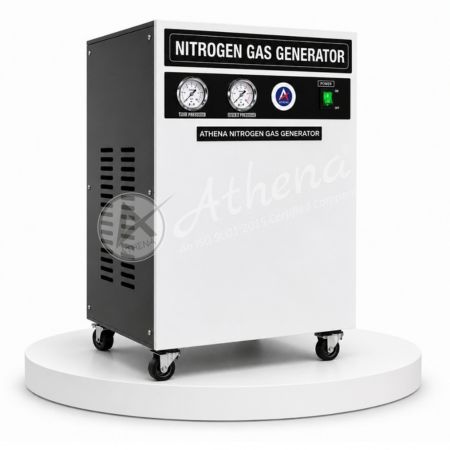
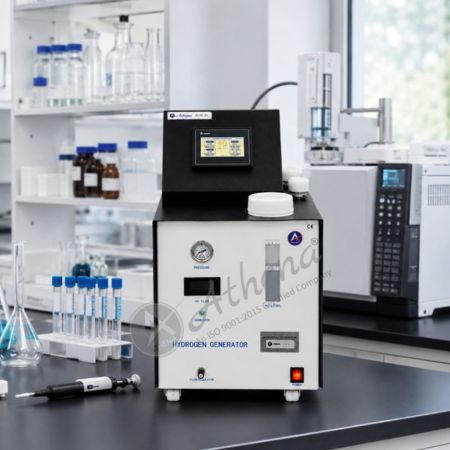
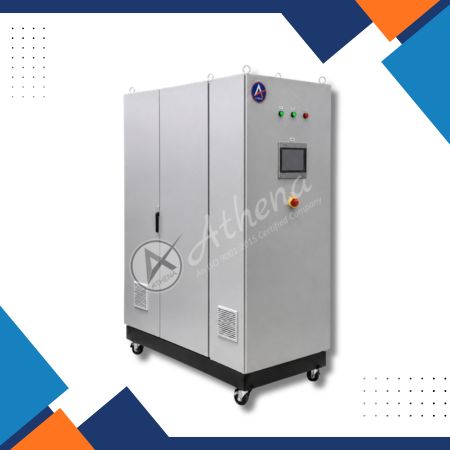
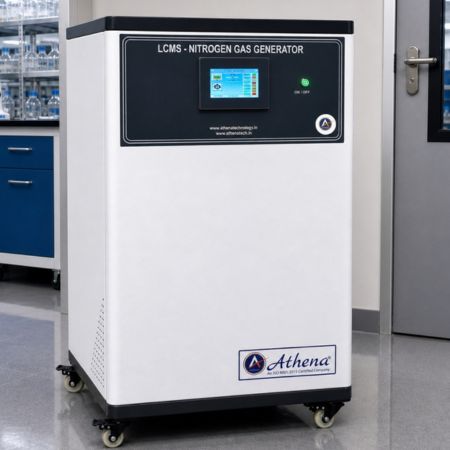
Athena Instruments’ LC-MS / LC-MS-MS Nitrogen Gas Generator is designed for laboratories that need an on-site nitrogen supply for analytical instruments. The system combines PSA and membrane separation technology with configurations offering up to 99.99% nitrogen purity, depending on the application. Models shown by Athena provide approximately 6–65 LPM flow, with 7-bar standard operating pressure and options for nitrogen, zero air and dry air. The system is intended for continuous operation and includes integrated air treatment.
A Practical Note for Your Laboratory
If you are currently comparing nitrogen generators for an LC-MS system, start with the instrument specification sheet rather than the generator catalogue. Note the required flow, pressure, purity and gas configuration first. You can then compare models on the same technical basis.
For laboratories considering an Athena Instruments system, the LC-MS / LC-MS-MS generator range provides several flow and gas configurations, making the instrument requirement the logical starting point for selecting the appropriate model.
Frequently Asked Questions
Q1. What purity of nitrogen is required for LC-MS?
Answer: The required purity depends on the LC-MS manufacturer’s specifications and the application. Many analytical systems require high-purity nitrogen, so the generator should be selected to meet the instrument’s stated gas-quality requirements.
Q2. How much nitrogen does an LC-MS system need?
Answer: Nitrogen demand varies by instrument model, configuration and operating conditions. Check the manufacturer’s specified flow requirement in LPM before selecting generator capacity. Choosing a capacity with appropriate operating margin can also be useful if laboratory requirements may increase.
Q3. Is a nitrogen generator better than nitrogen cylinders for LC-MS?
Answer: A generator can provide an on-site nitrogen supply and reduce cylinder handling, storage and replacement logistics. Whether it is the better option depends on instrument demand, laboratory usage, available infrastructure and the overall operating cost.
Q4. What pressure does an LC-MS nitrogen generator need?
Answer: The required pressure varies by LC-MS system. Athena’s standard LC-MS generator configuration operates at 7 bar, but the connected instrument’s technical documentation should always be checked before selecting the pressure configuration.
Q5. How do I select the right nitrogen generator for LC-MS/MS?
Answer: Start with the LC-MS/MS manufacturer’s requirements for nitrogen purity, flow and pressure. Then compare those specifications with the generator’s capacity, gas configuration, technology, monitoring, maintenance requirements and support arrangements.