Accurate analytical results begin long before a sample reaches an HPLC, LC-MS/MS, or GC-MS system. The quality of sample preparation often determines the reliability, reproducibility, and sensitivity of the final analysis. As laboratories process larger sample volumes while maintaining strict quality standards, the choice of solid-phase extraction (SPE) equipment has become increasingly important.
Positive pressure SPE systems have gained widespread acceptance because they deliver controlled and uniform pressure to every cartridge, helping laboratories achieve consistent extraction performance across multiple samples. From pharmaceutical research and bioanalysis to food safety and environmental testing, many laboratories are replacing conventional extraction methods with positive pressure systems to improve workflow consistency and analytical confidence.
What Is a Positive Pressure Solid Phase Extraction (SPE) System?
A positive pressure solid phase extraction (SPE) system is a sample preparation platform that applies controlled gas pressure above each SPE cartridge, allowing liquid samples to pass through the sorbent bed at a consistent flow rate. Unlike vacuum-based systems that draw samples from below, positive pressure ensures that every cartridge receives nearly identical pressure throughout the extraction process.
This uniform pressure distribution helps reduce flow-rate variation between samples, resulting in improved extraction consistency and better analyte recovery. The approach is particularly valuable in laboratories handling multiple samples simultaneously, where reproducibility is essential for method validation and regulatory compliance.
Because pressure can be adjusted based on the sample matrix and extraction method, analysts gain greater control over each stage of the workflow without introducing unnecessary variability.
Why Vacuum-Based SPE Can Introduce Workflow Variability
Vacuum manifolds have supported laboratory sample preparation for many years and remain suitable for numerous applications. However, as analytical methods become more sensitive and laboratories process higher sample volumes, maintaining consistent flow across multiple cartridges can become more challenging.
Some common considerations include:
- Uneven vacuum distribution across cartridges
- Variable sample flow rates during extraction
- Differences in cartridge drying times
- Greater dependence on operator adjustments
Even small differences in flow rate may influence analyte recovery, particularly when processing complex biological, pharmaceutical, or environmental samples. Laboratories seeking greater consistency often evaluate positive pressure systems because they offer more uniform operating conditions across every extraction position.
Why Modern Laboratories Are Choosing Positive Pressure SPE Systems
Today’s analytical laboratories operate under increasing pressure to deliver accurate results while maintaining efficient workflows. Whether supporting pharmaceutical development, clinical research, or environmental monitoring, laboratories require sample preparation methods that remain consistent from one batch to the next.
Positive pressure SPE systems address several practical laboratory challenges.
First, they provide uniform pressure across every cartridge, helping minimize variability between samples. This consistency supports reliable extraction performance, especially when processing large sample batches.
Second, controlled pressure improves reproducibility. Laboratories performing method validation or regulated testing benefit from workflows that produce repeatable extraction conditions across different operators and analytical runs.
Another important advantage is improved analyte recovery. Stable flow rates allow samples to interact more consistently with SPE sorbents, reducing the likelihood of incomplete extraction caused by uneven pressure distribution.
Many laboratories also appreciate the flexibility offered by adjustable pressure settings, allowing different sample types to be processed without changing the overall workflow.
As analytical testing volumes continue to grow, these operational advantages contribute to greater laboratory efficiency while supporting high-quality analytical data.
Applications Across Analytical Laboratories
Positive pressure SPE systems are used across a wide range of laboratory environments because they support consistent sample preparation for diverse analytical methods.
Some of the most common applications include:
- Pharmaceutical quality control and drug development
- Bioanalytical studies using LC-MS/MS workflows
- Food safety and residue analysis
- Environmental water and soil testing
- Clinical research laboratories
- Forensic and toxicology investigations
Regardless of the application, the primary objective remains the same: achieving reproducible sample preparation that supports reliable analytical results.
What to Look for When Selecting a Positive Pressure SPE System
Not every positive pressure SPE system offers the same level of flexibility or compatibility. Laboratories should evaluate equipment based on both current analytical requirements and future workflow demands.
Important considerations include:
- Adjustable and independent pressure control
- Compatibility with multiple SPE cartridge sizes
- Support for different collection tube formats
- Durable construction for daily laboratory use
- Simple cartridge replacement and rack handling
- Integrated solvent waste management
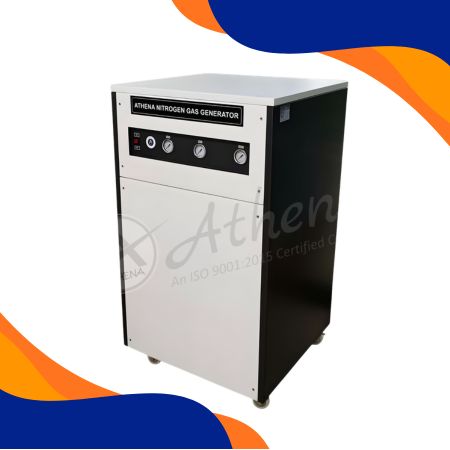
- Compatibility with nitrogen drying workflows
- Availability of technical support and service
These features can improve day-to-day laboratory operations while helping maintain consistent extraction performance over time.
How Athena Instruments Supports Modern SPE Workflows
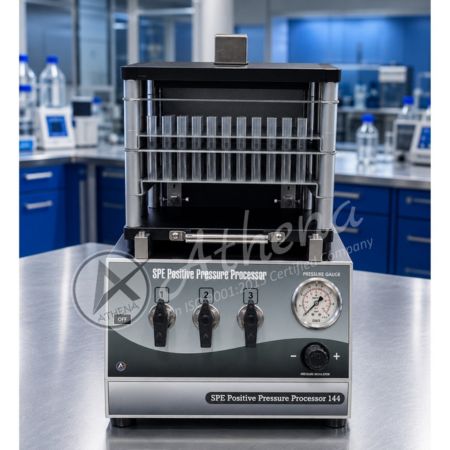
When laboratories evaluate positive pressure SPE systems, they often look for equipment that combines operational flexibility with dependable performance. Athena Instruments offers an SPE Positive Pressure Manifold designed to support these practical laboratory requirements without adding unnecessary complexity to the workflow.
The system is available in 48, 96, and 144-position configurations, allowing laboratories to select a capacity that matches their analytical workload. Adjustable pressure up to 56 psi helps maintain controlled extraction conditions, while compatibility with 1 ml, 3 ml, and 6 ml SPE cartridges provides flexibility for different sample preparation methods.
The manifold also supports commonly used collection tube formats and incorporates practical features such as independent pressure regulation, dual pressure gauges, stainless steel construction, quick cartridge switching, secure rack handling, integrated waste management, and compatibility with nitrogen drying workflows. These design elements help laboratories maintain consistent extraction performance while supporting efficient day-to-day operations.
Rather than replacing good laboratory practices, equipment like this complements validated sample preparation methods by providing greater control over extraction conditions.
Building More Reliable Sample Preparation Starts with Consistency
Analytical instruments continue to become more sensitive, but reliable results still depend on the quality of sample preparation. Consistent extraction conditions reduce variability, improve analyte recovery, and support reproducible laboratory workflows across a wide range of analytical applications.
For laboratories evaluating positive pressure SPE systems, selecting equipment that offers controlled pressure, flexible compatibility, and dependable construction can make a meaningful difference in day-to-day operations. Athena Instruments provides an SPE positive pressure manifold designed to support these objectives, giving laboratories a practical solution for consistent solid phase extraction workflows while adapting to varying sample volumes and analytical requirements. As testing demands continue to evolve, investing in reproducible sample preparation remains an important step toward achieving dependable analytical results.
Frequently Asked Questions
Q1. Is positive pressure SPE better than a vacuum manifold?
Answer: Each approach has its place depending on the application. Positive Pressure SPE is often preferred when laboratories require greater consistency, uniform flow rates, and improved reproducibility across multiple samples.
Q2. Why is reproducibility important in SPE?
Answer: Consistent extraction conditions reduce analytical variability, helping laboratories obtain reliable and repeatable results for research, quality control, and regulated testing.
Q3. Which laboratories benefit most from positive pressure SPE systems?
Answer: Pharmaceutical, bioanalytical, clinical, food safety, environmental, forensic, and toxicology laboratories commonly use positive pressure SPE for high-quality sample preparation.
Q4. Can positive pressure SPE improve analyte recovery?
Answer: Maintaining consistent pressure throughout extraction can help improve analyte recovery by reducing variations in sample flow between cartridges.
Q5. What features should laboratories consider before purchasing an SPE manifold?
Answer: Laboratories should evaluate pressure control, cartridge compatibility, sample capacity, construction quality, waste management, compatibility with drying workflows, and after-sales technical support.