

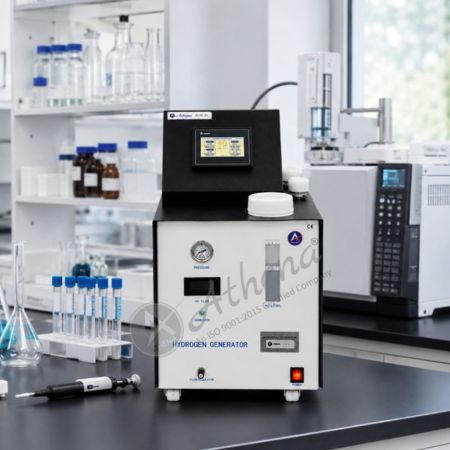
Hydrogen gas is widely used in laboratories, analytical instruments, and industrial processes where a controlled and reliable gas supply is required. A hydrogen gas generator produces hydrogen on-site rather than depending entirely on compressed gas cylinders. Among the available technologies, Proton Exchange Membrane (PEM) systems are suited to applications that require high-purity hydrogen with controlled output.
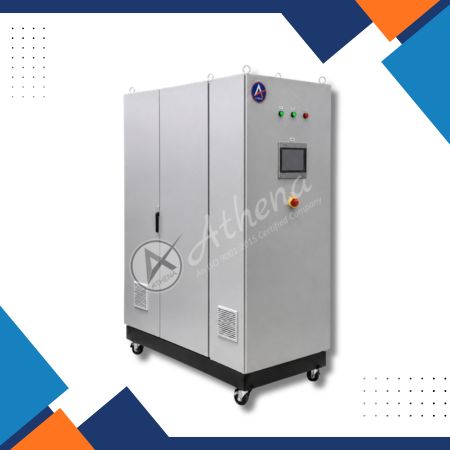
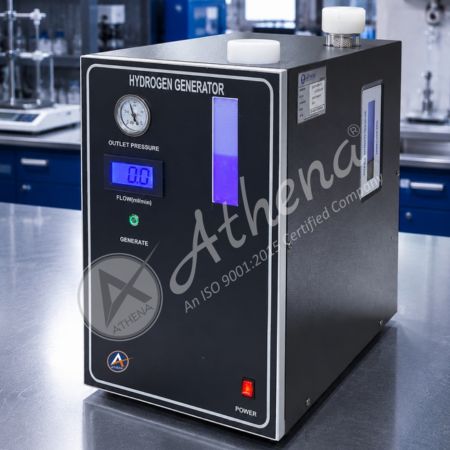
Athena Instruments offers a PLC-controlled PEM hydrogen generation system designed for laboratory, analytical, pharmaceutical, research, and selected industrial applications. Its range includes multiple flow capacities to accommodate different hydrogen requirements.
What Is a Hydrogen Gas Generator?
A hydrogen gas generator is a system that produces hydrogen at the point of use. Instead of storing a large quantity of hydrogen in cylinders, the generator uses an electrochemical process to produce the gas as required.
For laboratory applications, this approach can simplify gas supply management and reduce the need for frequent cylinder replacement. The required generator capacity depends on factors such as hydrogen consumption, purity, pressure, and the connected instrument or process.
A PEM hydrogen generator uses proton exchange membrane technology to generate hydrogen from water. This makes it particularly relevant to applications where a consistent supply of high-purity hydrogen is required.
How Does a PEM Hydrogen Generator Work?
PEM, or Proton Exchange Membrane, electrolysis uses water and electricity to produce hydrogen through an electrochemical reaction. In systems such as the Athena Instruments PEM PLC generator, deionized water is used as the feed source.
During electrolysis, water is separated to generate hydrogen. The PEM allows proton transport while helping separate the generated gases. The resulting hydrogen can then be supplied to the connected application at a controlled flow and pressure.
A PLC-based control system adds another layer of operational management by allowing parameters and system status to be monitored through the control interface.
Key Features of a PEM Hydrogen Gas Generator
The usefulness of a laboratory hydrogen generator depends on more than hydrogen production alone. Flow capacity, gas purity, monitoring and safety features all influence whether a system is appropriate for a particular application.
Key features of the Athena Instruments system include:
- SPE/PEM technology: Supports electrochemical hydrogen generation using deionized water.
- High-purity hydrogen: The product range is designed for applications requiring high-purity hydrogen, with specifications varying by model and configuration.
- Safety monitoring: Pressure and operating conditions can be monitored as part of the generator’s protection system.
The product range shown by Athena Instruments includes models from ATHH-300 through ATHH-4000, covering output-flow requirements from approximately 310 ml/min to 4000 ml/min.
| Model | Approx. Output Flow |
| ATHH-300 | 0–310 ml/min |
| ATHH-600 | 0–610 ml/min |
| ATHH-1000 | 0–1020 ml/min |
| ATHH-2000 | 0–2020 ml/min |
| ATHH-3000 | 0–3050 ml/min |
| ATHH-4000 | 0–4000 ml/min |
Purity and pressure specifications vary by model. The product reference indicates configurations with hydrogen purity up to the >99.999% / >99.9999% range and output pressure options up to 15 bar.
Benefits of On-Site Hydrogen Generation
Producing hydrogen at the point of use can change how laboratories manage their gas supply. Rather than depending exclusively on stored cylinders, users can generate hydrogen according to the requirements of a compatible instrument or process.
Some practical benefits include:
- Reduced dependence on cylinder replacement and storage
- A controlled hydrogen supply for compatible laboratory applications
- Less routine handling of high-pressure gas cylinders
- Suitable high-purity gas generation for analytical applications
The actual benefit depends on the application’s gas consumption, operating conditions and required purity. A generator should therefore be selected based on technical requirements rather than capacity alone.
Applications of Hydrogen Gas Generators
Hydrogen generators are used across several laboratory and industrial environments. The appropriate configuration depends on the gas requirements of the specific instrument or process.
Gas Chromatography
Hydrogen can be used in gas chromatography applications as a carrier gas or detector fuel gas, depending on the instrument configuration. A dedicated generator can provide a continuous source of hydrogen for compatible GC systems.
Analytical and Research Laboratories
Analytical instruments may require gases with defined purity and consistent supply conditions. Hydrogen generators can support laboratories working with analytical measurements where gas quality is an important operating consideration.
Pharmaceutical and Industrial Applications
Hydrogen generation can also be relevant to pharmaceutical research, laboratory processes, and selected industrial applications. The Athena Instruments product reference lists uses, including hydrogenation and other hydrogen-dependent processes.
CVD, MCVD and Continuous Laboratory Operation
Hydrogen is used in certain material-processing and research environments, including CVD and MCVD-related applications. Generator selection for these processes should account for required flow, pressure, purity and operating duration.
Choosing the Right Hydrogen Generator for Your Application
Before purchasing a hydrogen generation system, users should match the generator to the actual gas requirements of their application.
Important factors include:
- Required hydrogen flow rate
- Hydrogen purity
- Required output pressure
- Instrument or process compatibility
- Monitoring and safety requirements
- Installation and maintenance considerations
The manufacturer also matters, particularly when the system will be integrated into laboratory equipment or an industrial process. When comparing gas generator manufacturers in India, consider technical support, product configuration, documentation, service availability and the manufacturer’s understanding of the intended application.
Athena Instruments Hydrogen Gas Generator (PEM PLC)
Athena Instruments provides a PEM-based, PLC-controlled hydrogen generation system for laboratory and industrial applications. The range covers several output capacities, allowing users to select a configuration according to their hydrogen demand.
The system combines PEM/SPE electrolysis, PLC-based monitoring, high-purity hydrogen generation, and safety-oriented controls. Higher-capacity and customised high-pressure configurations are also indicated in the product information for applications with specific requirements.
Selecting a PEM Hydrogen Generator for Reliable Laboratory Gas Supply
A PEM hydrogen generator can provide a practical alternative to conventional cylinder-based supply where on-site hydrogen generation is compatible with the application. The right system depends on the required flow, purity, pressure and operating conditions. For laboratories and industrial users evaluating available options, understanding these specifications is more useful than choosing a generator based on capacity or marketing claims alone.
Frequently Asked Questions
Q1. What is a hydrogen gas generator used for?
Answer: A hydrogen gas generator produces hydrogen on-site for applications such as gas chromatography, analytical instruments, research laboratories, hydrogenation, and selected industrial processes.
Q2. How does a PEM hydrogen generator produce hydrogen?
Answer: A PEM generator uses electrolysis to separate water into hydrogen and oxygen. The proton exchange membrane facilitates the electrochemical process and separation required for hydrogen generation.
Q3. Why is hydrogen purity important in laboratory applications?
Answer: Impurities in a gas supply can affect certain analytical and laboratory processes. High-purity hydrogen can therefore be important when an instrument or application has specific gas-quality requirements.
Q4. Can a hydrogen generator replace hydrogen cylinders?
Answer: For compatible applications, on-site generation can reduce dependence on hydrogen cylinders. However, the generator must provide the required flow, purity and pressure for the connected instrument or process.
Q5. What should I consider when choosing a hydrogen generator?
Answer: Consider hydrogen demand, purity, pressure, application compatibility, monitoring features, safety requirements, and manufacturer support before selecting a system.