

Setting up a gas chromatography (GC) laboratory involves more than selecting a GC instrument. The quality and consistency of the gas supply, pressure control, and sampling arrangement can directly affect instrument performance, analytical repeatability, and laboratory safety.
A well-planned GC gas system should therefore consider the required gases, purity, flow rate, pressure, laboratory workload, and sampling conditions before equipment is selected.
For laboratories evaluating these requirements, Athena Instruments provides gas generation, gas regulation, and sampling solutions that can be configured around different analytical and industrial applications.
What Does a Gas Chromatography Lab Need?
A typical GC laboratory may require one or more gases depending on the instrument configuration and detector being used. These can include nitrogen, hydrogen, and zero air.
The exact requirements depend on the GC model, detector, analytical method, and operating conditions. For this reason, gas supply equipment should not be selected only on the basis of nominal flow or pressure.
Before specifying a system, identify:
- The gases required by the GC and detector
- Required gas purity
- Gas flow rate and operating pressure
- Number of GC instruments to be supplied
- Whether continuous operation is required
- Available laboratory space and utilities
This information provides the foundation for selecting a suitable gas-generation and regulation system.
Gas Generators for GC Laboratories
Gas generators can provide a continuous source of laboratory gases without relying entirely on high-pressure gas cylinders. Depending on the application, a GC laboratory may use nitrogen, hydrogen, or zero air generators.
Nitrogen Gas Generator for GC
Nitrogen may be required as a carrier or supporting gas depending on the GC configuration. Its purity and delivery stability are important considerations for analytical applications.
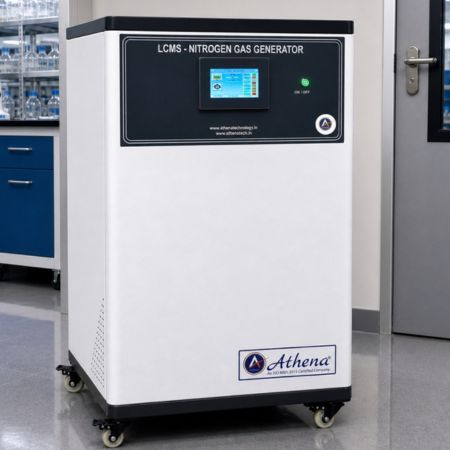
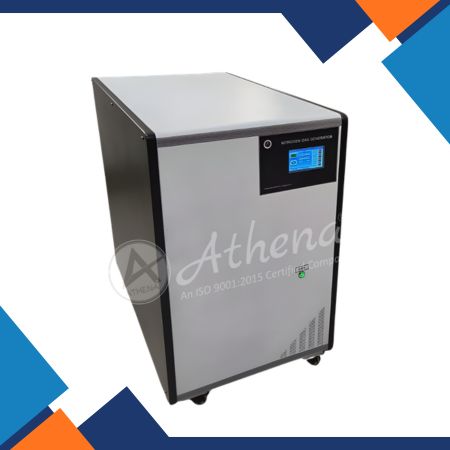
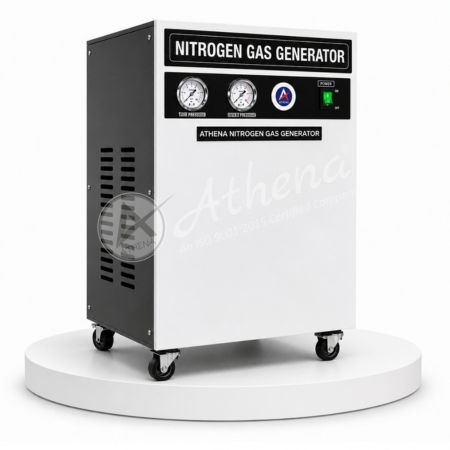
Athena Instruments’ Nitrogen Gas Generator for Gas Chromatography uses Pressure Swing Adsorption (PSA) technology and is available in multiple configurations.
The models shown by Athena Instruments include:
| Model | Flow Rate | Purity | Pressure | Suitable For |
| ATN-02 | 200 ml/min | 99.999% | 7 bar | Up to 2 GC systems |
| ATN-03 | 300 ml/min | 99.999% | 7 bar | Up to 3 GC systems |
| ATN-05 | 500 ml/min | 99.999% | 7 bar | Up to 5 GC systems |
The system incorporates purification, drying and filtration features and is designed for continuous laboratory operation.
However, the appropriate capacity should be determined from the actual gas consumption of the laboratory rather than simply choosing the largest available model.
Zero Air Generator for GC
Zero air can be required by certain GC detectors and analytical methods. Unlike ordinary compressed air, zero air is treated to remove contaminants that could interfere with sensitive analytical measurements.
Athena Instruments offers dedicated zero air generators for GC and TOC applications. The systems use purification technologies, including PSA and catalytic hydrocarbon removal, depending on the configuration.
The specifications shown for Athena’s ATZ series vary by application, with configurations intended for GC, TOC, and online TOC analysis.
When selecting a zero-air generator, pay particular attention to hydrocarbon levels, moisture, carbon monoxide, carbon dioxide, flow capacity, and required purity.
Hydrogen Generation for Gas Chromatography
Hydrogen can also be required in GC applications, depending on the instrument and detector configuration.
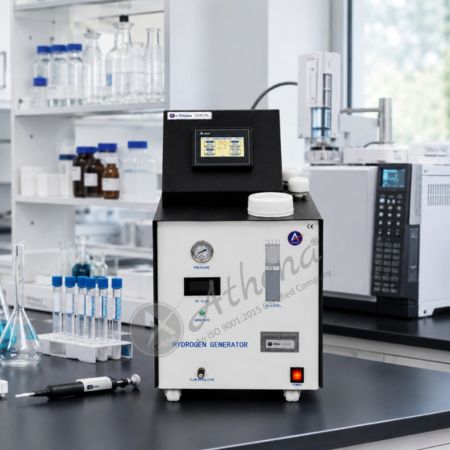
For laboratories considering on-site hydrogen generation, Athena Instruments offers PEM-based hydrogen gas generation systems with PLC-controlled operation.
The displayed models range from approximately 310 ml/min to 4,000 ml/min, with hydrogen purity specifications reaching up to 99.9999% depending on the configuration. Output-pressure options are also available for different requirements.
The correct hydrogen generator should be selected according to the GC’s actual hydrogen consumption, pressure requirement, and laboratory operating conditions.
Why Gas Regulators Matter in a GC Lab
Even when a suitable gas source is available, pressure regulation remains an important part of the gas delivery system.
A regulator helps reduce and control the pressure supplied from a gas source so that downstream equipment receives gas within the required operating range.
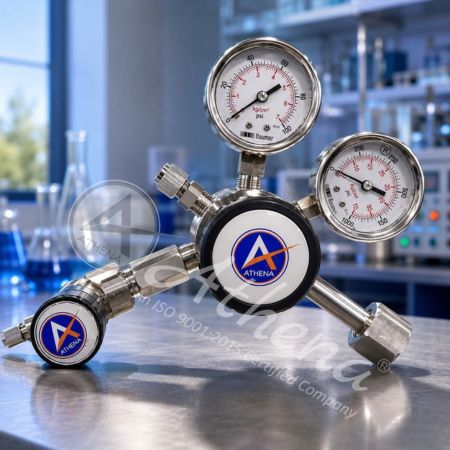
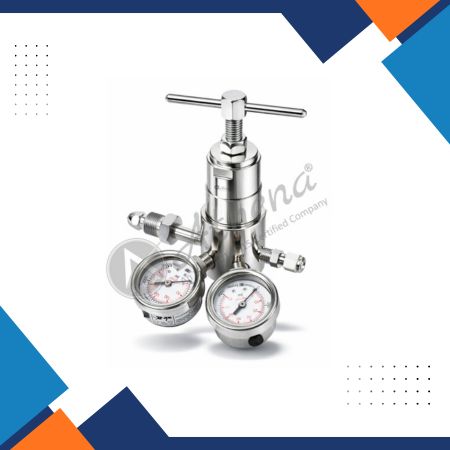
Athena Instruments manufactures gas cylinder regulators in configurations including brass, SS316, and SS316L construction, with single-stage and two-stage options and diaphragm or piston mechanisms.
The appropriate regulator depends on factors such as:
- Gas type and compatibility
- Inlet pressure
- Required outlet pressure
- Material compatibility
- Single-stage or two-stage regulation
- Connection requirements
For high-purity analytical gases, the regulator and associated gas-contact materials should be compatible with the application to minimize contamination risks.
Sampling Systems: The Other Part of the Setup
Gas supply is only one part of an analytical workflow. Sampling conditions can also influence the reliability and safety of measurements.
For applications involving gases, liquids, or liquefied gases, a controlled sampling arrangement can help maintain representative samples while reducing exposure and emissions.
Athena Instruments’ closed-loop sampling systems are designed for controlled sampling of liquid and gas applications. The displayed configurations include models rated up to 150 bar for liquid sampling, 250 bar for gas sampling, and 300 bar for LPG sampling.
These systems use enclosed sampling arrangements and are intended for applications including oil and gas, refinery and petrochemical operations, chemical processing, and laboratory analysis.
A closed-loop system is particularly relevant when the sample is hazardous, volatile, or under pressure.
How to Choose the Right GC Gas Supply System
There is no single gas-generation configuration that suits every gas chromatography laboratory.
Start with the GC manufacturer’s requirements and the analytical method. Then calculate the required flow and pressure for each gas, considering the number of instruments that may operate simultaneously.
Also consider future laboratory expansion. A system that meets today’s demand may become inadequate if additional GC instruments are installed later.
For a customized configuration, provide the equipment supplier with your GC model, detector type, required gases, purity requirements, flow rates, operating pressure, and number of instruments.
Setting Up a Reliable Gas Chromatography Laboratory
A dependable GC laboratory combines the right instrument with a properly specified gas supply, pressure-control system, and sampling arrangement.
Gas generators can provide a continuous source of gases such as nitrogen, hydrogen, and zero air, while appropriate regulators help maintain controlled delivery. Sampling systems can provide an additional layer of control when working with pressurized or hazardous samples.
Athena Instruments offers these technologies across laboratory and industrial applications. Rather than selecting equipment based only on a product name, laboratories should match the generator capacity, purity, pressure and sampling configuration to their actual analytical requirements.
If you are planning a new gas chromatography lab, expanding an existing laboratory, or replacing cylinder-based gas supplies, share your GC model, detector, required gas, flow rate, purity, and pressure requirements with Athena Instruments. This information can help determine the appropriate gas-generation and gas-control configuration for your application.
Frequently Asked Questions
Q1. What gases are commonly required for gas chromatography?
Answer: Depending on the GC configuration and detector, laboratories may require gases such as nitrogen, hydrogen, and zero air. The exact requirements should be confirmed from the instrument and analytical method.
Q2. Is a gas generator better than gas cylinders for a GC laboratory?
Answer: It depends on the laboratory’s gas consumption, operating pattern, space, safety requirements, and infrastructure. Gas generators can provide continuous on-site supply, while cylinders may be appropriate for other applications.
Q3. What should I consider when selecting a GC gas generator?
Answer: Consider gas purity, flow rate, outlet pressure, number of GC systems, operating hours, and application requirements. These parameters are more useful than selecting a generator based only on its nominal capacity.
Q4. Can Athena Instruments help select a GC gas-generation system?
Answer: Yes. Athena Instruments can evaluate the requirement based on the customer’s GC configuration and technical requirements. Providing the GC model, detector, gas requirement, flow rate, purity, and pressure helps the technical team assess the appropriate solution.