

Laboratory filtration is an important part of sample preparation, microbiological testing, and pharmaceutical quality control. It helps separate suspended particles, microorganisms and other unwanted substances from liquid samples before further analysis. A Laboratory Filtration Assembly provides a controlled setup for carrying out this process using suitable membrane filters and vacuum-assisted filtration.
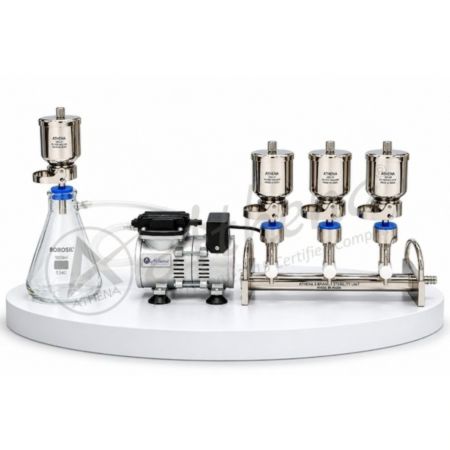
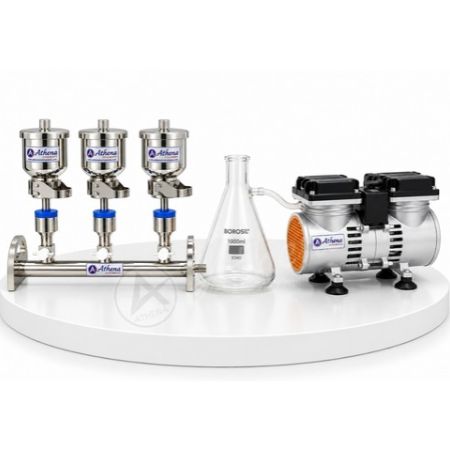
A typical assembly consists of a filtration manifold, filter funnels, membrane holders and vacuum connections. The configuration may vary depending on the number of samples being processed, the required filter size and the laboratory’s daily workload.
Athena Instruments offers laboratory filtration assemblies made from SS316L stainless steel, with different funnel capacities and manifold configurations to suit laboratory requirements. Understanding the components, available models and selection factors can help laboratories choose equipment that fits their testing procedures.
Overview of Laboratory Filtration Assembly
A laboratory filtration assembly is a combination of equipment used to separate unwanted particles from liquid samples through a filtration membrane. In vacuum-assisted filtration, a vacuum source creates a pressure difference that draws the liquid through the membrane. The membrane retains particles according to its filtration characteristics, while the filtered liquid passes into a receiving flask.
These assemblies are commonly used in pharmaceutical laboratories, microbiological testing facilities, water analysis laboratories and food quality control environments.
Depending on the application, a filtration assembly can have a single filtration position or a multi-position manifold. Multiple positions allow laboratories to process several samples using a shared setup, making the equipment useful for routine testing workflows.
Key Components of a Laboratory Filtration Assembly
Each component has a specific role in the filtration process. Selecting compatible components is important for maintaining a suitable setup.
1. Filtration Manifold
The filtration manifold connects multiple filtration units to a common vacuum source. It provides the base for arranging different filtration positions within one assembly.
Three-stage and six-stage configurations are commonly selected according to the number of samples a laboratory needs to process. The appropriate arrangement depends on sample volume, available workspace and testing frequency.
2. Filter Funnels and Membrane Holders
Filter funnels hold the liquid sample during filtration, while membrane holders secure the filter in position. Funnel capacity and filter diameter should match the sample volume and intended procedure.
The material of these components should also be compatible with the liquids and cleaning agents used in the laboratory.
3. Membrane Filters
Membrane filters retain particles based on their pore size and material properties. Different membrane materials, such as cellulose nitrate and PES, may be selected depending on the sample composition and application.
The filter diameter and pore size should be determined by the laboratory’s testing method rather than selected solely on the basis of convenience.
4. Vacuum Pump and Collection Flask
A vacuum pump provides the suction required to draw liquid through the membrane. The receiving flask collects the filtered liquid, while a vacuum trap can help prevent liquid from entering the pump.
Vacuum tubing and properly fitted connections help maintain the required operating conditions throughout the filtration process.
Types of Laboratory Filtration Assemblies
Laboratories can choose between different configurations depending on sample volume and the number of filtration operations performed.
- Single-position filtration assembly: Suitable for laboratories processing individual samples or handling smaller testing batches.
- Three-stage filtration assembly: Provides three filtration positions and can be useful when several samples need to be processed within the same workflow.
- Six-stage filtration assembly: Offers six filtration positions for laboratories with higher sample-processing requirements.
- Vacuum-assisted membrane filtration assembly: Uses vacuum pressure to draw liquid samples through membrane filters for controlled separation and sample preparation.
The choice between these configurations should be based on actual laboratory requirements. A six-stage arrangement may not be necessary for a facility that processes only a few samples each day.
Athena Instruments Laboratory Filtration Assembly: Models and Specifications
Athena Instruments offers laboratory filtration assembly models designed for different funnel capacities and filter sizes. The range includes ATHF-300, ATHF-500 and ATHF-1000, allowing laboratories to consider different sample volumes when selecting equipment.
The available model specifications are:
| Model | Funnel Capacity | Filter Size |
| ATHF-300 | 300 ml | 47 mm |
| ATHF-500 | 500 ml | 47 mm |
| ATHF-1000 | 1000 ml | 90 mm |
The assemblies feature SS316L stainless steel construction and are available with three-stage and six-stage manifold configurations. Custom manifold configurations can also be requested according to specific laboratory requirements.
The ATHF-300 and ATHF-500 models accommodate 47 mm filters, while the ATHF-1000 model is designed for 90 mm filters. This distinction is useful when comparing equipment based on the filtration area and sample volume required for a particular procedure.
Before selecting a model, laboratories should also check membrane compatibility, the required number of filtration positions and the suitability of the complete vacuum setup.
Applications of Laboratory Filtration Assemblies
Laboratory filtration assemblies are used across several testing environments where liquid samples need to be processed before analysis.
Pharmaceutical quality control: Membrane filtration is used in pharmaceutical testing workflows, including applicable sterility testing procedures. Equipment selection should follow the relevant validated method and laboratory requirements.
Microbiological testing: Membrane filtration can help capture microorganisms from liquid samples for subsequent examination. It is used in microbiological analysis of water and other suitable samples.
Water and wastewater analysis: Laboratories use filtration procedures to prepare and examine water samples as part of microbiological and quality assessment activities.
Food and beverage testing: Filtration can support sample preparation and selected microbiological testing procedures involving liquid food and beverage samples.
HPLC sample preparation: Suitable membrane filtration can help remove suspended particles from samples before they enter analytical instruments. Membrane compatibility with the sample and analytical method is important.
How to Choose the Right Laboratory Filtration Assembly
The right equipment depends on the type of sample, filtration method and laboratory workload. Consider the following factors before making a selection.
- Funnel capacity: Choose a capacity that accommodates the volume of liquid processed during each filtration cycle.
- Filter diameter: Match the filter size with the membrane holder and filtration requirements. Common options in the Athena Instruments range include 47 mm and 90 mm.
- Membrane pore size: Select the appropriate pore size according to the particles or microorganisms that need to be retained and the applicable testing procedure.
- Number of filtration positions: Consider whether a single-position, three-stage or six-stage arrangement is suitable for daily sample throughput.
- Construction material: SS316L stainless steel offers corrosion resistance for many laboratory environments. Compatibility with the actual sample, chemicals and cleaning agents should still be checked.
- Vacuum requirements: Ensure that the vacuum pump, tubing and connections are suitable for the selected assembly.
- Cleaning and sterilization: Check whether the equipment materials and construction are compatible with the cleaning and sterilization procedures required by the laboratory.
Comparing these factors before purchasing helps avoid selecting equipment that does not match the laboratory’s actual workflow.
Choosing a Filtration Assembly for Your Laboratory
Selecting laboratory filtration equipment involves understanding how samples are processed, which membrane filters are required and how many filtration positions are needed during routine operations.
Athena Instruments provides laboratory filtration assembly options through its ATHF-300, ATHF-500 and ATHF-1000 models, with SS316L stainless steel construction and different funnel capacities. Laboratories can compare the available specifications and manifold configurations to identify a suitable arrangement for their applications.
Frequently Asked Questions
Q1. What is a laboratory filtration assembly used for?
Answer: It is used to separate suspended particles and other unwanted substances from liquid samples using a suitable filtration membrane. Applications include microbiological testing, pharmaceutical quality control and sample preparation.
Q2. What are the main components of a filtration assembly?
Answer: The main components include a filtration manifold, filter funnels, membrane holders, membrane filters, a receiving flask, vacuum tubing and a compatible vacuum source.
Q3. What is the difference between a three-stage and six-stage filtration assembly?
Answer: A three-stage assembly provides three filtration positions, while a six-stage assembly provides six. The selection depends on the number of samples processed and the laboratory’s workflow.
Q4. Which filter sizes are available in Athena Instruments filtration assemblies?
Answer: The available models accommodate 47 mm and 90 mm filters. ATHF-300 and ATHF-500 use 47 mm filters, while ATHF-1000 uses a 90 mm filter.
Q5. Why is SS316L stainless steel used in filtration assemblies?
Answer: SS316L stainless steel offers good corrosion resistance and is used in laboratory equipment where material durability and compatibility are important. Its suitability should be checked against the specific chemicals and cleaning conditions involved.