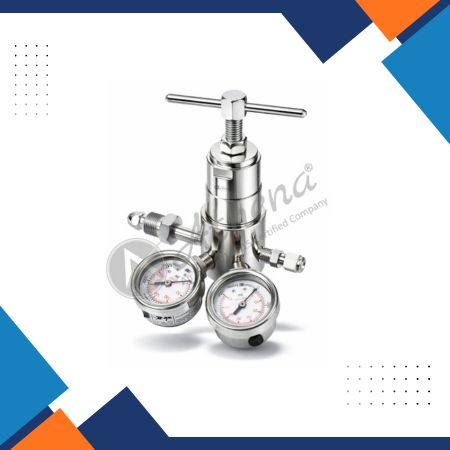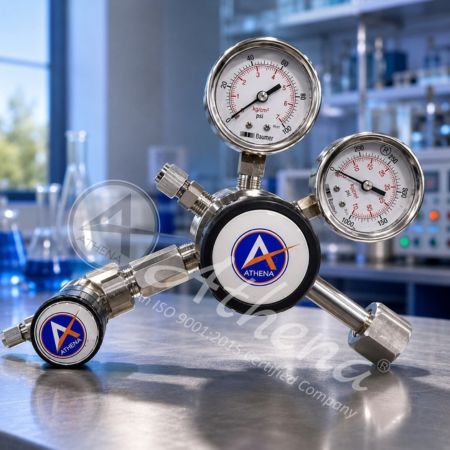
When gas is stored in a cylinder, its pressure can be much higher than the pressure required by the equipment using it. A Two Stage Cylinder Regulator reduces this pressure in a controlled manner before the gas reaches the application.
Instead of making the entire pressure reduction in one step, a two-stage regulator divides the process between two pressure-reduction stages. This arrangement can help provide more stable outlet pressure as cylinder pressure changes during use.
What Is a Two Stage Cylinder Regulator?
A Two Stage Cylinder Regulator is a pressure-control device designed to reduce the high pressure of gas from a cylinder to a lower, usable outlet pressure.
The key difference from a single-stage regulator is that pressure reduction takes place progressively through two stages. The first stage brings the cylinder pressure down to an intermediate level, while the second stage further reduces and controls the pressure delivered to the application.
This staged approach is particularly relevant where consistent gas pressure is important for laboratory, industrial, chemical, and specialty-gas applications.
How Does a Two Stage Gas Regulator Work?
The operation can be understood by looking at the two pressure-reduction stages separately.
First Pressure-Reduction Stage
Gas enters the regulator from the cylinder at its available inlet pressure. The first stage reduces this pressure to an intermediate pressure that is more manageable for the second stage.
The regulator responds to changes in pressure and gas demand through its internal pressure-control mechanism, helping regulate the gas as it moves through the system.
Second Pressure-Reduction Stage
The second stage receives the intermediate-pressure gas and reduces it further toward the required outlet pressure.
Because the overall pressure drop is divided between two stages, the second stage does not have to handle the complete reduction from cylinder pressure to the final outlet pressure.
The result is a controlled outlet supply that can be less affected by changes in cylinder pressure than a single-stage arrangement, although actual performance depends on the regulator design, operating conditions, flow demand, and application.
Why Does a Two Stage Regulator Help Maintain Stable Outlet Pressure?
Cylinder pressure does not remain constant throughout its use. As gas is consumed, the conditions at the regulator inlet can change.
A well-designed two-stage regulator helps manage these changes by progressively reducing pressure rather than relying on one pressure-reduction stage.
Key factors include:
- Progressive pressure reduction: The pressure drop is distributed across two stages.
- Changing cylinder pressure: The second stage provides additional regulation as inlet conditions change.
- Flow demand: Outlet pressure can also be influenced by the amount of gas being drawn from the regulator.
- Application requirements: The appropriate regulator depends on the gas, pressure requirements, flow requirements, and system design.
It is important to understand that “stable” does not mean perfectly constant under every condition. Pressure performance depends on the regulator’s design and the operating conditions in which it is used.
Why Is Stable Outlet Pressure Important?
Many gas applications require pressure to remain within an appropriate operating range. Significant pressure variation can affect how gas is supplied to downstream equipment or processes.
For example, controlled gas pressure can be relevant in laboratory systems, specialty-gas applications, chemical processes, and equipment that requires a consistent gas supply.
The importance of pressure stability also depends on the application. A regulator should therefore be selected based on the actual gas and operating requirements rather than simply choosing a regulator based on cylinder pressure alone.
What Should You Consider When Choosing a Two Stage Cylinder Regulator?
Selecting a Two Stage Cylinder Regulator involves more than looking at pressure reduction. The gas being used and the conditions of the application are equally important.
Consider these factors before selecting a regulator:
- Gas type: Different gases can have different compatibility and application requirements.
- Required outlet pressure: The regulator should be suitable for the pressure required by the downstream system.
- Flow requirement: Gas demand can affect pressure performance, so the required flow should be considered.
- Connections and system requirements: The regulator needs to be compatible with the cylinder and downstream gas system.
- Application: Laboratory, industrial, chemical, and specialty-gas applications may have different requirements.
For gases with specific handling or compatibility considerations, selecting a regulator intended for the particular gas is especially important.
Athena Instruments Two Stage Gas Regulators
Athena Instruments provides a range of gas-specific regulators within its Two Stage Cylinder Regulator category. The range shown on its website includes regulators for several specialty and industrial gases.
| Gas | Athena Instruments Product |
| Ammonia (NH₃) | Ammonia Gas High Pressure Regulator |
| Chlorine (Cl₂) | Chlorine Gas Regulator |
| HCl | HCL Gas Regulator |
| Hydrogen Sulfide (H₂S) | H₂S Specialty Gas Grade Regulator |
| SO₂Nitrogen, HydrogenOxygen, Helium, Argon | SO₂ Gas Regulator |
The range illustrates why gas identification is an important part of regulator selection. A regulator should be selected according to the particular gas, required pressure, flow conditions, connections, and intended application.
If you are selecting a regulator for a specific gas, reviewing the corresponding product information can help you identify the appropriate option before installation.
Matching the Regulator to the Gas and Application
The main purpose of a two-stage design is not simply to reduce pressure. It is to manage pressure progressively so that the downstream gas supply can remain appropriately controlled as operating conditions change.
For anyone choosing a two-stage cylinder regulator, the gas itself should be one of the first considerations. Athena Instruments offers gas-specific options for ammonia, chlorine, HCl, H₂S, and SO₂, allowing the selection process to begin with the actual gas application rather than a one-size-fits-all approach.
Frequently Asked Questions
What is a two-stage cylinder regulator?
A two-stage cylinder regulator reduces gas pressure through two successive pressure-control stages. This distributes the overall pressure reduction and can help provide more consistent outlet pressure as cylinder conditions change.
Why use a two-stage gas regulator?
A two-stage design can be useful where greater outlet-pressure stability is required as cylinder pressure decreases. Its suitability depends on the gas, flow requirement, operating pressure, and application.
What is the difference between a single-stage and two-stage regulator?
A single-stage regulator performs the primary pressure reduction in one stage, while a two-stage regulator divides pressure reduction between two stages. The appropriate choice depends on the requirements of the gas system.
Can one gas regulator be used for different gases?
Gas compatibility must be considered before using a regulator with another gas. The regulator’s materials, design, connections, and intended gas service should be checked rather than assuming that one regulator is suitable for every gas.
How do I choose the right gas regulator?
Start with the gas type, cylinder pressure, required outlet pressure, flow requirement, connections, and application. For specialty or reactive gases, gas-specific compatibility should also be verified.